
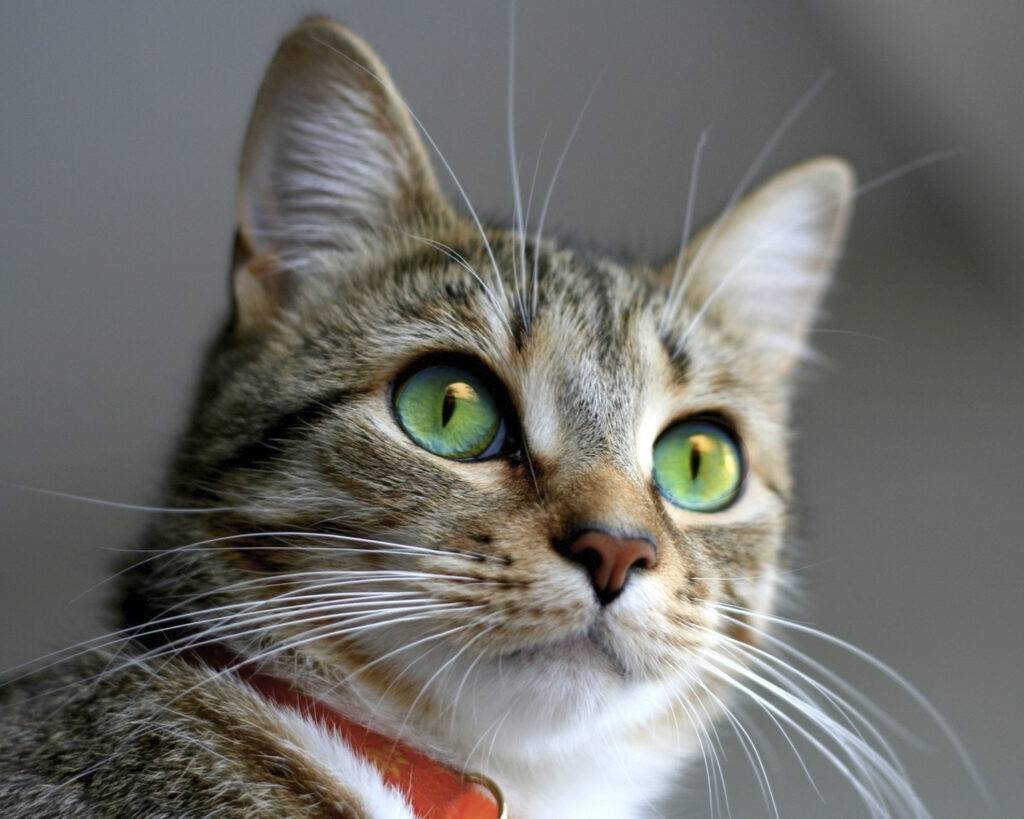
The American Wirehair is a rare, distinctly American breed. Physically it is nearly identical to the American Shorthair, yet one feature sets it completely apart: a coat in which every hair is crimped, hooked, or bent at the tip. The result is a springy, wiry, almost lamb-like texture you can feel the moment you stroke the cat. Calm, affectionate, and remarkably easygoing, the Wirehair makes a quiet and devoted companion.
Quick Facts
| Origin | United States |
|---|---|
| Size | Medium (males 9.9–14.3 lb / 4.5–6.5 kg, females 7.0–11.0 lb / 3.2–5.0 kg) |
| Coat | Short; most colors and patterns |
| Body type | Substantial, well-muscled |
| Lifespan | 14–18 years |
| Temperament | Calm, affectionate, playful, adaptable |
| Activity level | Moderate |
| Vocalization | Quiet |
| Grooming needs | Low |
| Good with children | Yes |
| Good with other pets | Yes |
| Hypoallergenic | No |
| Recognized by | TICA, CFA, WCF |


Appearance
The American Wirehair is a medium-sized, sturdy cat. Adult males typically weigh 9.9–14.3 lb (4.5–6.5 kg) and females 7.0–11.0 lb (3.2–5.0 kg). Body type, head shape, eye shape, and overall proportions are essentially the same as the American Shorthair’s: a strong, well-muscled frame with a broad, rounded head, full cheeks, and large round eyes whose color complements the coat.
What truly sets the breed apart is the coat. The hairs are crimped or bent at the tips—including the whiskers and the hairs inside the ears—producing a dense, springy, wiry texture quite unlike anything else in the cat world. Even the eyebrows curl. The coat is medium-short, resilient, and often compared to a sheep’s fleece. Most colors and patterns are accepted, with pointed, chocolate, and lilac being the usual exceptions.


Personality and Temperament
American Wirehairs are generally calmer and more reserved than American Shorthairs. They are affectionate, people-oriented, and fond of quiet company—happy to follow you from room to room and curl up in your lap, yet rarely demanding about attention.


The breed is intelligent and observant, and many Wirehairs keep a strong play drive well into adulthood—they will chase toys, learn to fetch, and stalk anything that flits past a window. They tolerate other cats and friendly dogs well, are gentle with children, and adapt comfortably to apartment life. Wirehairs are not vocal cats; expect soft trills and chirps rather than sustained meowing.
Health
The American Wirehair is generally a healthy breed with a typical lifespan of 14–18 years. Because the breed is small in numbers and traces back to a single founder kitten, breeders are mindful of inbreeding and routinely outcross to American Shorthairs to maintain genetic diversity.


The main health concern shared with the American Shorthair line is hypertrophic cardiomyopathy (HCM), the most common form of heart disease in cats; reputable breeders screen their breeding cats by echocardiogram. The wiry coat itself can be slightly more prone to skin oiliness in some individuals, but no specific dermatological condition is tied to the breed. As with any cat, routine veterinary checkups and core vaccinations remain the foundation of long-term health. For a plain-language overview of feline heart disease, the Cornell Feline Health Center is a reliable starting point, and the ASPCA offers practical general cat-care guidance.
Care and Grooming
The unusual coat is, perhaps surprisingly, low-maintenance. Brushing should be gentle and infrequent, because over-brushing can damage the curl. A weekly pass with a soft-bristle brush or a grooming glove is plenty; avoid metal combs and slicker brushes, which can flatten or break the wiry texture.
Bathe only when truly needed. The coat’s texture can occasionally trap oil, so a mild shampoo every few months helps. Trim claws every two to three weeks, brush the teeth regularly, and check the ears for wax. The breed is not especially prone to obesity but, like the American Shorthair, does best with measured portions and a high-quality diet. The American Veterinary Medical Association publishes useful owner resources on feeding, dental care, and preventive health.
History
The breed traces back to a single red-and-white male kitten named Council Rock Adam of Hi-Fi, born in Vernon, New York, in 1966 as a spontaneous mutation in a litter of farm-cat kittens. A breeder noticed the unusual coat texture and began a careful breeding program, using American Shorthair outcrosses to establish a stable line.
The American Wirehair was accepted for Cat Fanciers’ Association championship status in 1978 and is also recognized by TICA and the World Cat Federation. The breed remains genuinely rare—even in the United States, only a small number are registered each year—which makes it one of the more unusual cats you can bring home.
Registry Recognition
The American Wirehair is recognized by The International Cat Association (TICA), the Cat Fanciers’ Association (CFA), and the World Cat Federation (WCF), with breed recognition dating to the late 1960s.
Frequently Asked Questions
What makes the American Wirehair’s coat different?
Every hair is crimped, hooked, or bent at the tip—even the whiskers and the hairs inside the ears—giving the coat a dense, springy, wiry feel often compared to a sheep’s fleece. It is the defining feature that separates the breed from the otherwise near-identical American Shorthair.
Is the American Wirehair hypoallergenic?
No. Despite the unusual coat texture, the breed is not hypoallergenic. No cat breed is truly allergen-free, since the main allergen (the Fel d 1 protein in saliva and skin) is present in all cats regardless of coat type.
Are American Wirehairs good family pets?
Yes. They are calm, affectionate, and adaptable, and they generally get along well with children, other cats, and friendly dogs. Their quiet nature and moderate activity level also make them well suited to apartment living.
How much grooming does the coat need?
Very little. A gentle weekly brushing with a soft-bristle brush or grooming glove is enough. Over-brushing or using harsh tools like slicker brushes can actually damage the natural curl, so a light touch is best.
Why is the American Wirehair so rare?
The entire breed descends from a single mutation that appeared in 1966, and the population has always remained small. Because so few are bred and registered each year, the American Wirehair is consistently one of the rarest pedigreed cats in the United States.