
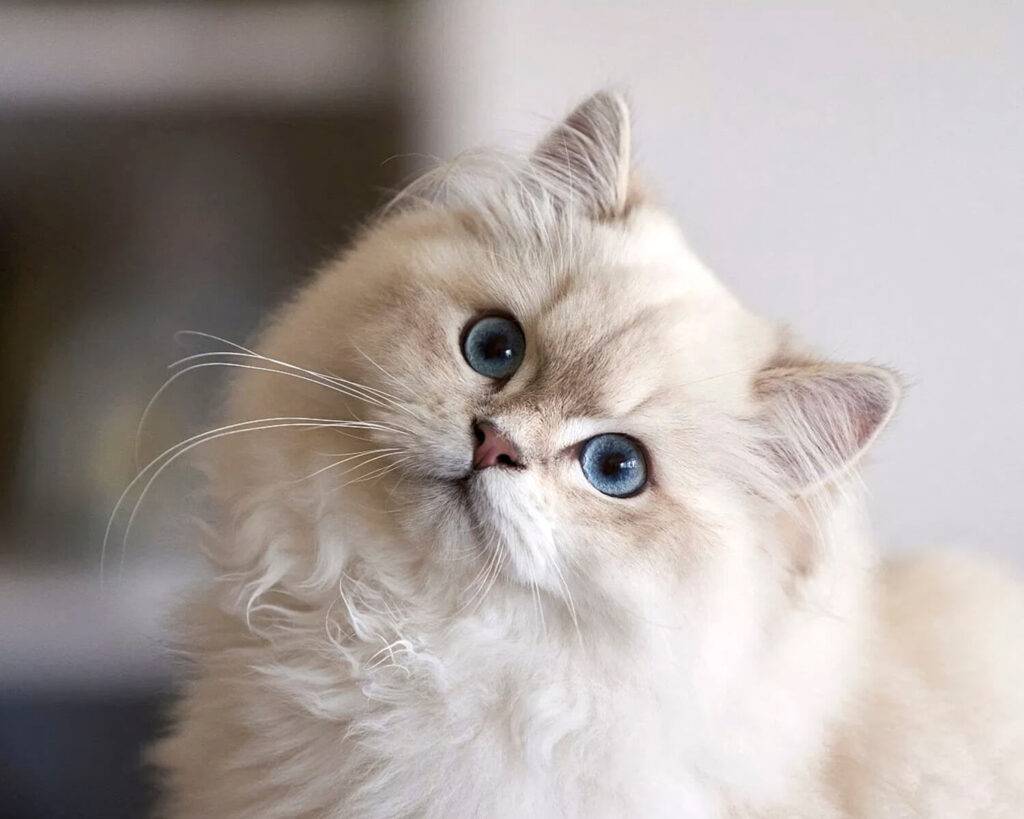
The British Longhair pairs the iconic teddy-bear build of the British Shorthair with a soft, semi-long coat — a calm, undemanding companion that suits family homes and quieter households alike.
Quick Facts
| Origin | United Kingdom |
|---|---|
| Size | Medium to large (males 12–18 lb / 5.5–8.2 kg, females 9–13 lb / 4.0–6.0 kg) |
| Coat | Semi-long, dense, plush; all colors and patterns |
| Body type | Cobby |
| Lifespan | 12–17 years |
| Temperament | Calm, affectionate, independent, easy-going |
| Activity level | Low |
| Vocalization | Quiet |
| Grooming needs | Moderate |
| Good with kids & pets | Yes |
| Hypoallergenic | No |
| Recognized by | TICA, FIFe, WCF (since 2001) |


Appearance
The British Longhair is a medium-to-large cat with substantial bone, a broad chest, and the unmistakable cobby build of its shorthaired cousin. Males typically weigh 12 to 18 pounds, while females range from 9 to 13 pounds. The head is round and full, with prominent cheeks, a short straight nose, and a strong chin that gives the breed its famously serene expression.
The eyes are large, round, and set wide apart, and their color usually harmonizes with the coat. Deep copper and gold are the most common shades, with greens and blues appearing in specific color varieties. The ears are small to medium, set wide on the skull, with slightly rounded tips that follow the curve of the head.
What sets the breed apart is the coat itself. It is semi-long, dense, and plush, with a thick undercoat that gives a soft, slightly stand-off texture rather than the silky drape of a Persian. A full ruff frames the face, and the tail is notably bushy. All colors and patterns are accepted, including solids, tabbies, bicolors, colorpoints, and the popular silver and golden shaded varieties.


Personality and Temperament
British Longhairs are known for their calm, easy-going temperament. They are affectionate without being clingy, and they tend to bond with the whole household rather than fixating on a single person. Many owners describe them as quietly observant — happy to share a room without demanding constant interaction.
This is a low-energy, low-vocal breed. Adults are content with short bursts of play followed by long naps, and they generally tolerate being left alone during the workday better than more sociable breeds. They get along well with children who handle them gently and usually accept other cats and friendly dogs without fuss.
Despite their composure, British Longhairs are not aloof. They will follow you from room to room, settle near you on the sofa, and greet you at the door — just rarely with loud meows. Their good manners and steady temperament make them an excellent choice for first-time owners and apartment living.
Health and Lifespan
The British Longhair is generally a robust, long-lived breed, with an average lifespan of 12 to 17 years. That said, careful breeder selection matters, because poor breeding practices can introduce or amplify hereditary problems.
The two conditions most commonly associated with the breed are hypertrophic cardiomyopathy (HCM), a thickening of the heart muscle that is the most common form of heart disease in cats, and polycystic kidney disease (PKD), inherited from the Persian ancestors used early in the breed’s development. According to the Cornell Feline Health Center, HCM can affect cats of any age and often shows no outward signs until it is advanced. Responsible breeders screen breeding cats with cardiac ultrasound and genetic testing for the PKD1 mutation, and they should be willing to share results.


British Longhairs are also prone to weight gain. Their relaxed activity level combined with a hearty appetite means owners need to portion food carefully, choose a high-quality diet, and provide regular play sessions to keep their cat lean. Excess weight is more than a cosmetic issue: the ASPCA notes that obesity is one of the most common preventable health problems in cats and contributes to diabetes and joint disease. Annual veterinary checkups, vaccinations, and dental care complete a sensible preventive plan.
Grooming and Care
The semi-long coat looks demanding but is easier to manage than it appears. A thorough brushing two to three times per week with a wide-toothed comb, followed by a softer brush, prevents mats and keeps the undercoat from felting. Daily grooming may be needed during the heavier spring and autumn shedding seasons.
Diet should be matched to life stage and lifestyle. Spayed and neutered cats benefit from a formula designed to support a slower metabolism, and cats with a history of urinary issues should be fed a diet that supports urinary tract health. Fresh water should always be available, ideally from a fountain, since British Longhairs can be lazy drinkers.
Environmental enrichment matters even for a quiet breed. A sturdy scratching post, a few elevated perches, and short interactive play sessions with wand toys help maintain muscle tone and prevent boredom. Litter boxes should be scooped daily, and many cats of this breed prefer larger boxes that comfortably accommodate their size.
History and Origins
The British Longhair traces its origins to early twentieth-century outcrossing programs in the United Kingdom. After the World Wars decimated the British Shorthair gene pool, breeders introduced Persians and other longhaired cats to rebuild the breed. The shorthaired offspring were registered as British Shorthairs, but a number of kittens carried the recessive longhair gene and occasionally produced fluffy littermates.


For decades these longhaired kittens were considered out-of-standard and excluded from breeding programs. From the 1980s onward, dedicated breeders began working with them as a distinct variety, and in 2001 major registries — including The International Cat Association (TICA) and the Fédération Internationale Féline (FIFe) — formally recognized the British Longhair as a separate breed. The World Cat Federation followed soon after.
Today the British Longhair is bred worldwide and remains one of the most popular semi-long breeds, prized for its gentle disposition, plush coat, and the same calm, dignified character that made the British Shorthair famous.
Frequently Asked Questions
What is the difference between a British Longhair and a British Shorthair?
The two breeds share the same cobby body, round face, and easy-going temperament; the difference is the coat. The British Longhair carries a recessive longhair gene that produces a dense, semi-long coat with a full ruff and a bushy tail, while the British Shorthair has a short, plush coat. In most respects — size, personality, and care needs — they are very similar.
Are British Longhairs good for first-time cat owners?
Yes. Their calm, undemanding nature, quiet voice, and tolerance for being left alone during the workday make them well suited to first-time owners and apartment living. Their grooming needs are moderate rather than intensive, which keeps day-to-day care manageable.
Do British Longhairs shed a lot?
They shed moderately year-round and more heavily during the spring and autumn coat changes. Brushing two to three times a week — and daily during peak shedding — keeps loose hair under control and prevents the undercoat from matting.
How long do British Longhairs live?
A well-cared-for British Longhair typically lives 12 to 17 years. Keeping the cat at a healthy weight, feeding a quality diet, and scheduling annual veterinary checkups all support a long, comfortable life.
Are British Longhairs hypoallergenic?
No. No cat breed is truly hypoallergenic, and the British Longhair’s thick double coat means it is not a low-allergen choice. People with allergies should spend time around the breed before committing.