
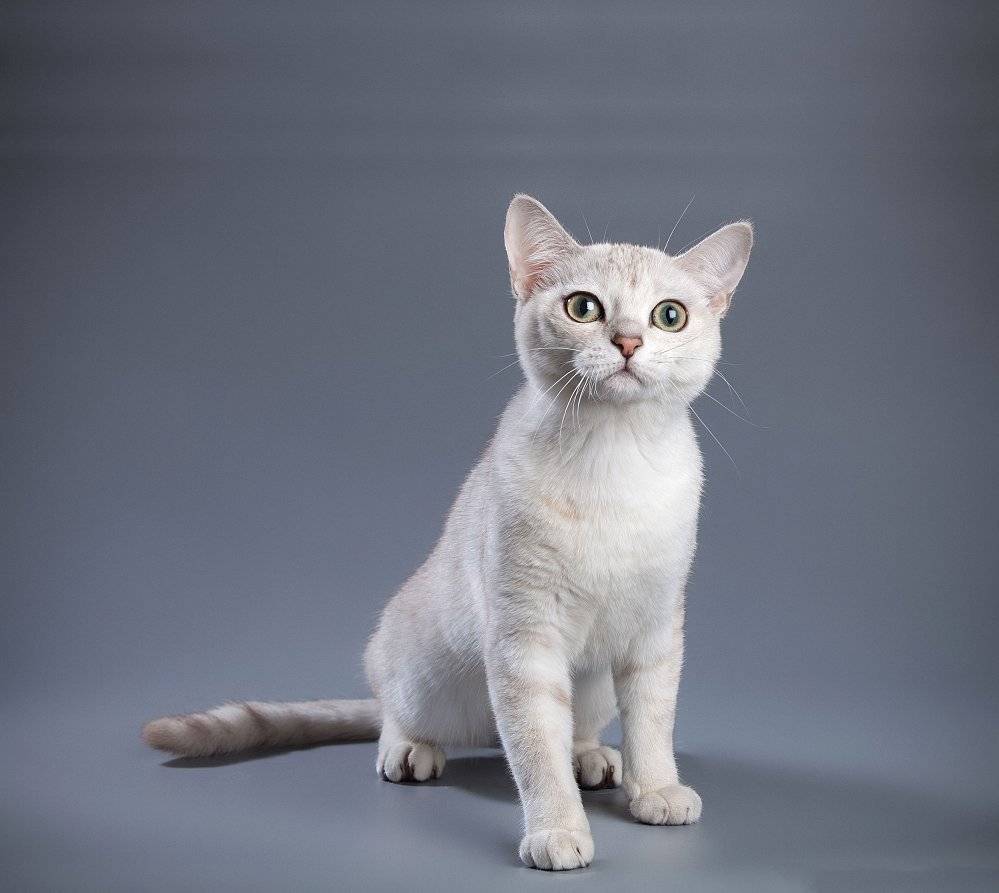
A true English aristocrat with impeccable manners and a natural sense of tact, the Burmilla is the kind of cat who never imposes on her family yet always welcomes attention and is happy to join a game. Her relaxed temperament, paired with a sociable and playful streak, makes her an outstanding companion.
Key Takeaways
- The Burmilla is a medium-sized British breed created by an accidental cross between a Burmese and a silver chinchilla Persian.
- She is affectionate, easygoing, and sociable, and she typically gets along with children, respectful dogs, and other cats.
- Her short, silver-tipped coat is low-maintenance and usually needs only a weekly comb.
- The breed is generally healthy and long-lived, though polycystic kidney disease (PKD) has been reported, so screened parents matter.
- She thrives on company and daily play and does not do well when left alone for long stretches.
Quick Facts
| Origin | United Kingdom |
|---|---|
| Size | Medium (males 4.0–6.0 kg, females 3.0–5.0 kg) |
| Coat | Short; silver shaded or tipped over various colors |
| Body type | Semi-cobby |
| Lifespan | 10–15 years |
| Temperament | Affectionate, easygoing, playful, sociable |
| Activity level | Moderate |
| Vocalization | Quiet |
| Grooming needs | Low |
| Good with children | Yes |
| Good with other pets | Yes |
| Hypoallergenic | No |
| Recognized by | TICA, CFA, FIFe, WCF |


Appearance
The Burmilla—sometimes called the Burmese Silver—is a medium-sized cat. Males generally weigh 4.0–6.0 kg and females 3.0–5.0 kg. The build leans toward the heavier foreign type, with strong bones and well-developed muscles.
The body is compact and balanced, with the rump sitting slightly higher than the shoulder line. The limbs are sturdy, the back is firm, the hind legs are a touch longer than the forelegs, and the paws are round to oval. The neck is short and strong. The head is medium-sized and rounded, with a broad muzzle that forms a soft triangle, full cheeks (males may show jowls), and large, wide-set, crescent-shaped eyes outlined in dark pigment. Eye color runs through shades of green, with amber permitted in cream, red, and tortoiseshell varieties. The ears are medium, well spaced, and gently rounded at the tips, while the tail is medium in thickness and tapers to a rounded point.
The coat is short, silky, and lifted by a light undercoat. The base is gold or silver, with the tips shaded in blue, lilac, cream, red, brown, or chocolate. The standard calls for clear tipping, with the muzzle, back, and tail showing the deepest color. A faintly upturned mouth gives the Burmilla her trademark expression—a quiet, almost knowing smile that adds to her elegant presence.


Personality
The Burmilla blends the best of her Persian and Burmese ancestors. From the Persian side she takes a calm, easygoing nature; from the Burmese, an inquisitive, energetic, and playful streak. The result is a cat who is grounded but fun, dignified but never aloof.
Good manners seem built in. She is gentle by temperament and unlikely to demand the spotlight, yet she enjoys company, follows her people from room to room, and is always ready for a quiet cuddle or an active play session. Her affectionate, attentive style suits households where someone is around for much of the day, because she does not handle long stretches of solitude well.


That sociable nature also makes her easy to live with. Burmillas typically get along well with other cats, with respectful dogs, and with children who handle them kindly. Their sincerity and openness make them a popular pick for larger families. Before bringing one home, think honestly about how much time you can give: this is an intelligent, people-oriented cat who needs interaction, games, and gentle attention to be at her best.
Health
The Burmilla is generally a robust breed with a long average lifespan, but a hereditary predisposition to polycystic kidney disease (PKD) has been reported. Watch for early signs of kidney trouble—frequent trips to the litter box, increased thirst, reduced appetite, weight loss, or general lethargy—and contact your veterinarian promptly if any appear. Because PKD is inherited, ask any breeder to show screening results for the parents before you commit to a kitten, and keep up with regular checkups so problems are caught early (Cornell Feline Health Center).
Routine wellness exams, vaccinations, parasite prevention, and a balanced diet do most of the work in keeping a Burmilla healthy (ASPCA). With good care, this breed is considered long-lived, and many cats reach 15 years or more.


Care
The Burmilla is unfussy and naturally tidy. Her short coat is easy to maintain—a weekly comb is usually enough to lift loose hair and keep the silver tipping looking its best. Bathe only as needed, perhaps once or twice a year; even an indoor cat picks up household dust that can settle in the coat. Always use a shampoo formulated for cats, since human or general-purpose products can irritate the skin and dull the coat.
Beyond brushing, a few simple routines round out her grooming:
- Trim the claws roughly once a month.
- Check the ears weekly and clean gently with a feline ear lotion when they look dirty.
- Brush the teeth regularly to head off dental disease.


Diet has a major impact on long-term health and appearance. Feed a complete, balanced food matched to your cat’s age and activity level (AVMA). Combining wet and dry food from the same brand works well for most Burmillas, and frequent diet changes are best avoided. Mixing commercial cat food with random table scraps is not recommended, since an unbalanced diet, combined with low fluid intake, is one of the leading risk factors for urolithiasis (urinary stones).
Keep an eye on portion size and encourage daily play to prevent weight gain. An interactive toy session of ten or fifteen minutes, twice a day, is usually enough to keep a Burmilla mentally satisfied and physically fit.


History
The Burmilla was created in the United Kingdom—and largely by accident. In 1981, Baroness Miranda von Kirchberg was breeding both Persian and Burmese cats, keeping the two programs strictly separate. One day a lilac Burmese female was let out of her room by mistake, just as a silver chinchilla Persian male was being temporarily housed nearby on his way to a friend. The two found each other before anyone could intervene.


Three months later the unplanned litter arrived, and the kittens were striking—silver-shaded, gentle in temperament, and unlike anything either parent breed produced on its own. The Baroness saw their potential and began a careful breeding program to fix the new look and personality. The breed was named the Burmilla, a blend of Burmese and chinchilla. The first UK breed club followed in 1984, and FIFe granted official recognition in the 1990s. Today the breed is also recognized by The International Cat Association (TICA), the Cat Fanciers’ Association (CFA), and the World Cat Federation (WCF). The Burmilla remains relatively rare but is treasured by enthusiasts in the UK and around the world.
Frequently Asked Questions
Are Burmilla cats good with children and other pets?
Yes. Burmillas are sociable and even-tempered, and they generally do well with gently behaved children, respectful dogs, and other cats. Their easygoing nature makes them a good fit for busy, multi-pet households.
Do Burmillas need a lot of grooming?
No. The short, silky coat is low-maintenance. A weekly comb to remove loose hair is usually enough, with a bath only once or twice a year when needed. Add monthly nail trims, weekly ear checks, and regular tooth brushing.
How long do Burmilla cats live?
With good care, Burmillas commonly live 10 to 15 years, and many reach 15 or more. Routine veterinary exams, vaccinations, parasite prevention, and a balanced diet support a long, healthy life.
Are Burmilla cats hypoallergenic?
No. No domestic cat breed is truly hypoallergenic, and the Burmilla is no exception. People with cat allergies should spend time around the breed before bringing one home.
Can a Burmilla be left alone during the day?
Not for long. Burmillas are people-oriented and crave interaction, so extended periods of solitude can leave them bored or stressed. A companion pet or daily play and attention helps a Burmilla left alone while you work.