
Key Takeaways
- Most passenger railroads that accept pets require cats to ride inside an approved carrier for the entire trip.
- Policies vary by railroad and even by route, so confirm the rules and any pet fee before you book your ticket.
- Pet carriers usually count toward your carry-on allowance and must fit under or beside your seat, so size and weight limits matter.
- Documentation is rarely needed for a domestic trip but becomes essential the moment you cross a state or international border.
- A calm, well-prepared cat travels far better than one rushed into an unfamiliar carrier at the last minute.
Can you take a cat on the train, and what do you actually need to do it right? Rail travel can be one of the calmer, roomier ways to move a cat between cities, but the details depend heavily on the railroad you choose. Here is a clear, practical rundown of how train travel with a cat works and how to prepare for a smooth trip.


Can You Take a Cat on the Train?
In most cases, yes, and rail can be a surprisingly comfortable way to travel with a cat. The important thing to understand up front is that everything depends on the carrier. Not every railroad allows pets, and even those that do often limit them to certain routes, certain cars, or a set number of animals per train. Because of that, the single most useful habit you can build is to check the specific railroad’s pet policy before you get attached to a particular departure.
Before you choose and pay for a ticket, confirm directly with the railroad that pets are permitted on your exact train and route. Pet rules differ from one carrier to the next, so read the conditions in full first, then buy your ticket.
Do You Need a Separate Ticket for Your Cat?


In practice, your cat travels on your ticket plus a separate pet fee rather than on a full passenger fare of its own. That fee is added when you book, and how much it costs depends on the railroad and the class of service. Some carriers cap the number of pets per passenger and per train, so it is worth reserving your cat’s spot at the same time you book your own seat rather than assuming space will be available at the station.


Which Cars Can Carry a Cat?
This again comes down to the railroad. Some carriers welcome pets across most of their coach and sleeper accommodations, while others restrict animals to specific cars or booking classes. If you are planning a trip with your cat, confirm which cars accept pets before you choose a seat. Booking into the wrong car can mean being turned away at boarding, which is a stressful way to start a journey for both of you.
Do You Have to Book a Private Room to Travel With a Cat?
Usually not. On standard coach seating you simply pay your fare plus the pet fee and keep the carrier with you. A private room or sleeper becomes relevant only if you specifically want the extra space and privacy, or if a particular railroad requires enclosed accommodations for pets on longer overnight routes. As always, the railroad’s own policy is the final word, so check before assuming you must buy out a whole compartment.
What Do You Need to Travel With a Cat by Train?


For a domestic trip with a domestic carrier, the paperwork is usually minimal. Many railroads simply require your paid pet reservation and a secure carrier, with no health certificate needed for routine in-country travel. That said, requirements do change, so it is smart to confirm what your railroad asks for rather than relying on what was true last year.
Crossing a border is a different story. For international travel, and for many trips that cross a state line, you will typically need a full set of documents: a valid health certificate issued by your veterinarian, proof of current vaccinations such as rabies, and in some cases a microchip. Both the railroad and the destination’s authorities set these rules, so verify the exact requirements well in advance of your departure date. The American Veterinary Medical Association recommends scheduling a pre-travel veterinary visit to make sure your cat is healthy enough to travel and that documentation is in order.
Is a Carrier Required?
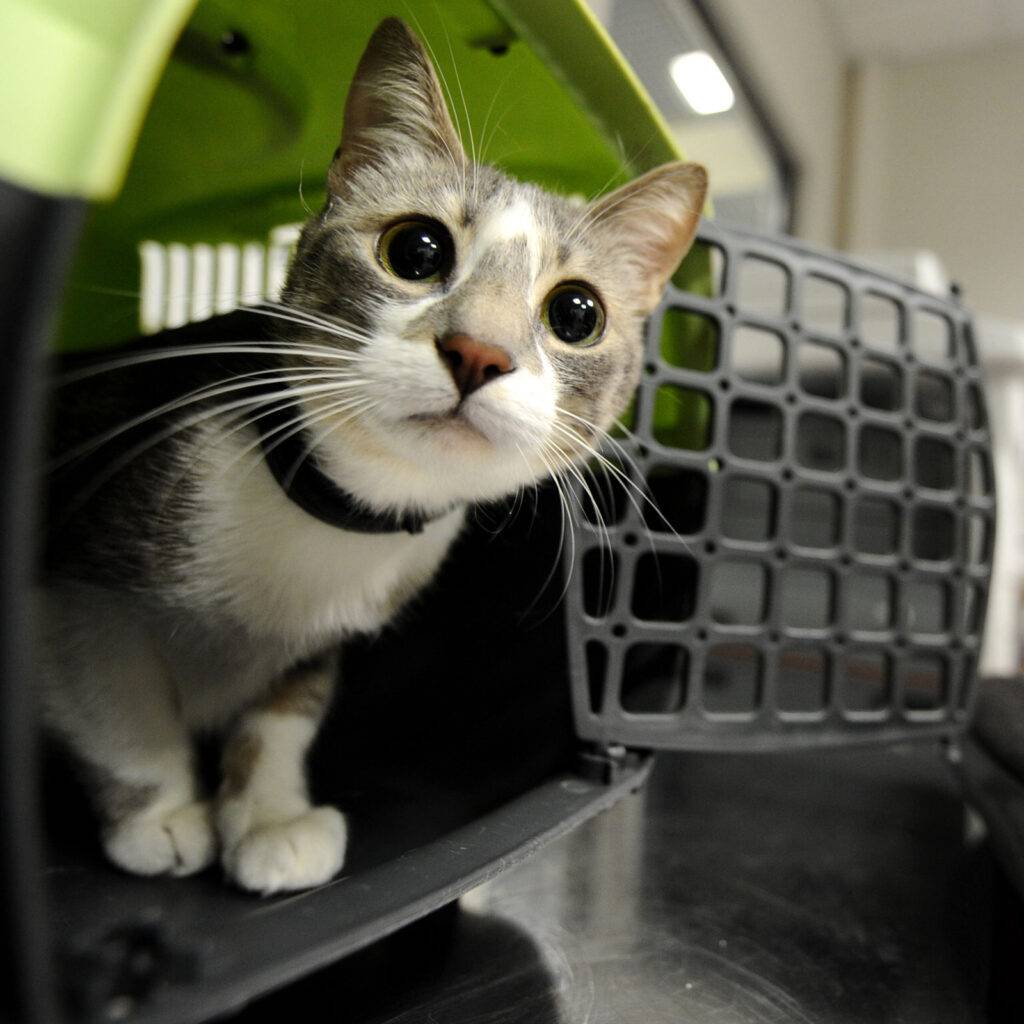
Yes. A cat should only travel in a sturdy, secure carrier designed for the purpose, whether it is a hard-sided crate or a well-built soft carrier. Letting a cat out of its carrier in a moving train is not recommended; even a mellow cat can bolt when startled, and a train car offers far too many places to hide or get hurt. Keep the carrier closed and let your cat ride it out from the safety of an enclosed space.
Size matters too. Railroads that allow pets generally require the carrier to fit under or beside your seat, and many publish specific maximum dimensions and a combined weight limit for the carrier and pet together. Measure your carrier against the railroad’s stated limits before travel day. A carrier that is roomy enough for your cat to stand, turn around, and lie down comfortably is both kinder and more likely to meet policy requirements.
To help your cat settle in, introduce the carrier days or weeks ahead of the trip so it feels familiar rather than threatening. Line it with an absorbent pad, add a piece of bedding that smells like home, and consider a short practice outing. The ASPCA offers helpful guidance on acclimating cats to carriers and reducing travel stress.

Your Step-by-Step Train Travel Checklist
When you have decided to travel with your cat by train, working through these steps in order will keep the process simple:
- Choose your route and preferred departure.
- Contact the railroad to confirm that pets are allowed on that specific train and to learn the full conditions, including fees and any limits on the number of animals.
- Reserve your cat’s spot and pay the pet fee, ideally at the same time you book your own ticket.
- Buy or prepare a sturdy, correctly sized carrier and help your cat get comfortable with it before the trip.
- Gather any required documents if your journey crosses a state or international border.
Remember that pet travel rules change often. Whenever you plan a trip, always double-check the current conditions of carriage.
With a little planning, the carrier chosen, the fee paid, and the rules confirmed, traveling by train with your cat can be calm and straightforward. Safe travels.
Frequently Asked Questions
Can I let my cat out of the carrier during the train ride?
No. For your cat’s safety and out of courtesy to other passengers, cats should stay inside the closed carrier for the whole trip. A moving train is loud and unfamiliar, and a frightened cat can slip away and become impossible to retrieve. Offer comfort by talking softly and keeping the carrier near you rather than opening it.
How do I keep my cat calm on a long train journey?
Familiarity is the biggest factor. Let your cat spend time in the carrier at home for days or weeks beforehand, add bedding that carries a familiar scent, and cover part of the carrier to create a den-like feel. Skip a large meal right before departure to reduce nausea, and offer small amounts of water at stops. If your cat has a history of severe travel anxiety, ask your veterinarian whether a calming aid is appropriate.
Does my cat need vaccinations or a health certificate to travel by train?
For a routine domestic trip, many railroads do not require health paperwork, though it is wise to keep vaccinations current regardless. For international travel and many interstate trips, a veterinary health certificate and proof of vaccinations such as rabies are typically required, and sometimes a microchip. Confirm the exact requirements with your railroad and check with the AVMA before you go.
What size carrier is allowed on a train?
Railroads that permit pets usually publish maximum carrier dimensions and a combined weight limit for the carrier and pet. The carrier generally needs to fit under or beside your seat while still giving your cat enough room to stand, turn, and lie down. Measure your carrier against the railroad’s stated limits before travel day to avoid problems at boarding.