
Many commercial cat foods contain grains, sometimes listed as one of the main ingredients. How does that square with the needs of an animal built to hunt? Here’s what carbohydrates actually do for your cat, and what to look for on the label.
Every cat is an obligate carnivore. That means cats are biologically designed to thrive on a diet built around animal protein, and they depend on nutrients found almost exclusively in animal tissue. A cat simply can’t stay healthy on a diet dominated by plant material. According to the Cornell Feline Health Center, cats have specific requirements for nutrients such as taurine, arachidonic acid, and preformed vitamin A that they can only get efficiently from animal sources. Even so, a small amount of carbohydrate has a role to play, and understanding that role helps you read a label with confidence.


What carbohydrates actually do for a cat
Carbohydrates are a source of quickly available energy. In a carnivore’s body, that fast energy can help drive the metabolic work of digesting and using animal protein, which is where a cat gets the energy and building blocks for the rest of its body. The key word is small: a modest fraction of carbohydrate, not a diet built on it.
It helps to picture how a cat would meet this need in nature. A cat’s most common wild prey is the mouse, an animal that itself eats seeds, grains, and plant matter. When a cat eats a mouse, it gets a meal of animal protein, but it also takes in the small amount of partially digested plant material sitting in the rodent’s stomach and gut. In other words, wild cats never sit down to a bowl of grain. They get a trace of plant carbohydrate, already broken down, as a byproduct of eating prey.


How to read grains on the label
Since your cat won’t be hunting mice in the kitchen, the carbohydrate in a commercial diet has to come from somewhere else, and how it’s handled matters. Keep three things in mind when you compare foods.
- Grain in cat food isn’t the fermented, pre-digested kind a cat would get from prey. To make plant carbohydrate more usable for a carnivore, manufacturers process the grain (for example, removing or breaking down the tough outer shell) so it’s more bioavailable.
- Grain should make up only a small part of the recipe. The foundation of any cat food should always be animal protein. Grain is a supporting ingredient, not the centerpiece.
- A good recipe often uses more than one carbohydrate source. Each grain breaks down at its own rate and releases energy differently, so a blend can deliver a steadier supply of energy than a single grain alone.


Why the type of grain matters: the glycemic index
The reason variety helps comes down to how fast each carbohydrate is digested, often described in terms of glycemic index. A grain that breaks down very quickly (a high glycemic response) can ferment in the digestive tract, which may leave your cat with gas and an upset stomach. On the other end, a carbohydrate that breaks down very slowly may not release energy fast enough to support the work of digesting protein, so your cat could come up short on usable energy.
This is why well-formulated premium foods use a modest amount of carbohydrate relative to their animal-protein sources, and why they often mix several carbohydrates rather than leaning on one. On an ingredient list you may see different crops, or even the same plant in more than one form. Rice grain and rice flour, for instance, digest at different rates, so in practice they behave like two distinct carbohydrate ingredients. When a food does rely on a single grain, manufacturers typically choose one with a moderate, middle-of-the-road glycemic index to balance these effects.


This is the basic picture of why grains show up in cat food and what role they play in digestion. Every cat is different, and conditions such as diabetes, food sensitivities, or weight problems can change what’s appropriate. If you have any doubts about your cat’s diet, don’t experiment on your own. Talk with your veterinarian, who can recommend a complete and balanced diet suited to your individual cat. The ASPCA also offers general guidance on feeding cats.
Frequently Asked Questions
Do cats actually need grains in their diet?
Cats don’t have a strict requirement for grains specifically, and they have no need for large amounts of carbohydrate. What they need is animal protein and the nutrients that come with it. Grains are simply one convenient, processed source of the small amount of carbohydrate that can support energy and digestion. A balanced food can be built with or without grain, as long as it’s complete and centered on animal protein.
Are grain-free cat foods better?
Not automatically. “Grain-free” does not mean low-carbohydrate, since these foods often replace grains with peas, potatoes, or other starches. What matters most is that the overall diet is complete, balanced, and built around animal protein. Some cats with specific sensitivities do better without certain grains, but for most cats the presence or absence of grain matters far less than the quality and balance of the whole recipe. Your veterinarian can help you decide what’s right for your cat.
Can grains cause digestive problems in cats?
They can in some cases. A carbohydrate that ferments quickly in the gut may contribute to gas and loose stools in sensitive cats, and a small number of cats have true food sensitivities to particular ingredients. For most cats, a modest amount of well-processed, varied carbohydrate is tolerated well. If your cat has ongoing digestive upset, see your veterinarian rather than changing diets repeatedly on your own.
Why does my cat eat grass if cats are carnivores?
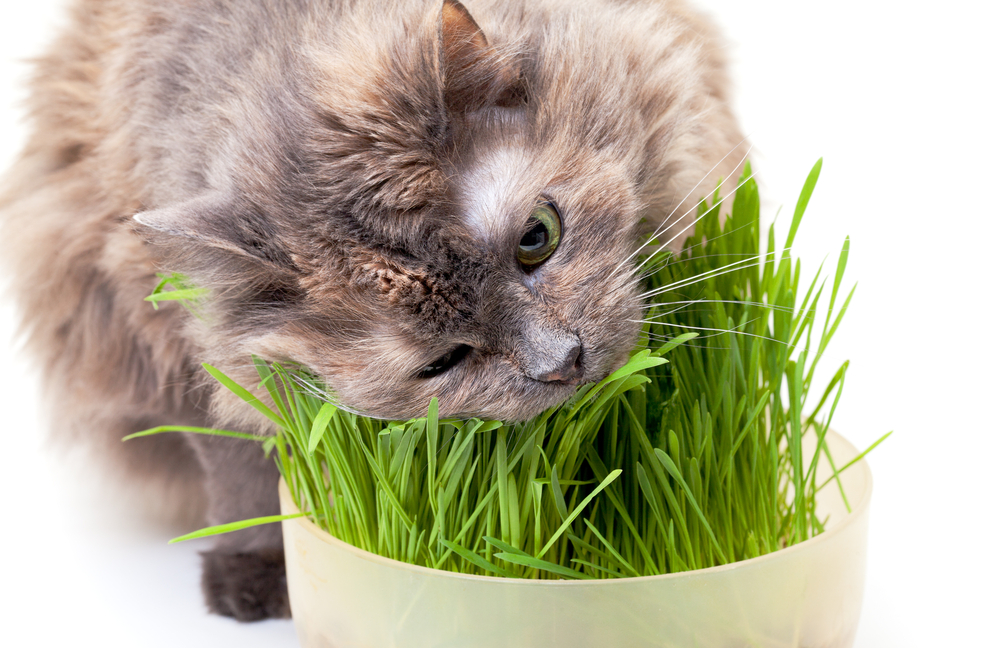
Eating grass is normal behavior for many cats and isn’t a sign that they need a plant-based diet. Cats may nibble grass to help bring up hairballs, for added fiber, or simply out of instinct. It’s separate from their nutritional need for animal protein. Keep any plants your cat can reach non-toxic, and check the ASPCA’s toxic and non-toxic plant lists if you’re unsure.