
Cats tolerate heat poorly and can overheat easily, so plenty of owners reach for the clippers before summer sets in. But is shaving your cat actually a good idea? Does a haircut make a cat more comfortable in warm weather? Let’s clear up the confusion.


Key Takeaways
- Healthy cats do not need haircuts to stay cool. A cat’s coat regulates body temperature in both hot and cold weather.
- Veterinarians recommend clipping only for genuine reasons, such as severe mats that can’t be brushed out or preparing skin for surgery.
- Shaving can backfire, leading to sunburn, poor-quality regrowth, chilling in cool weather, and a stressed-out cat.
- Regular brushing, occasional bathing, and consistent grooming do everything a haircut promises, without the downsides.
Cat Haircuts Are Popular, But Are They Good for the Cat?
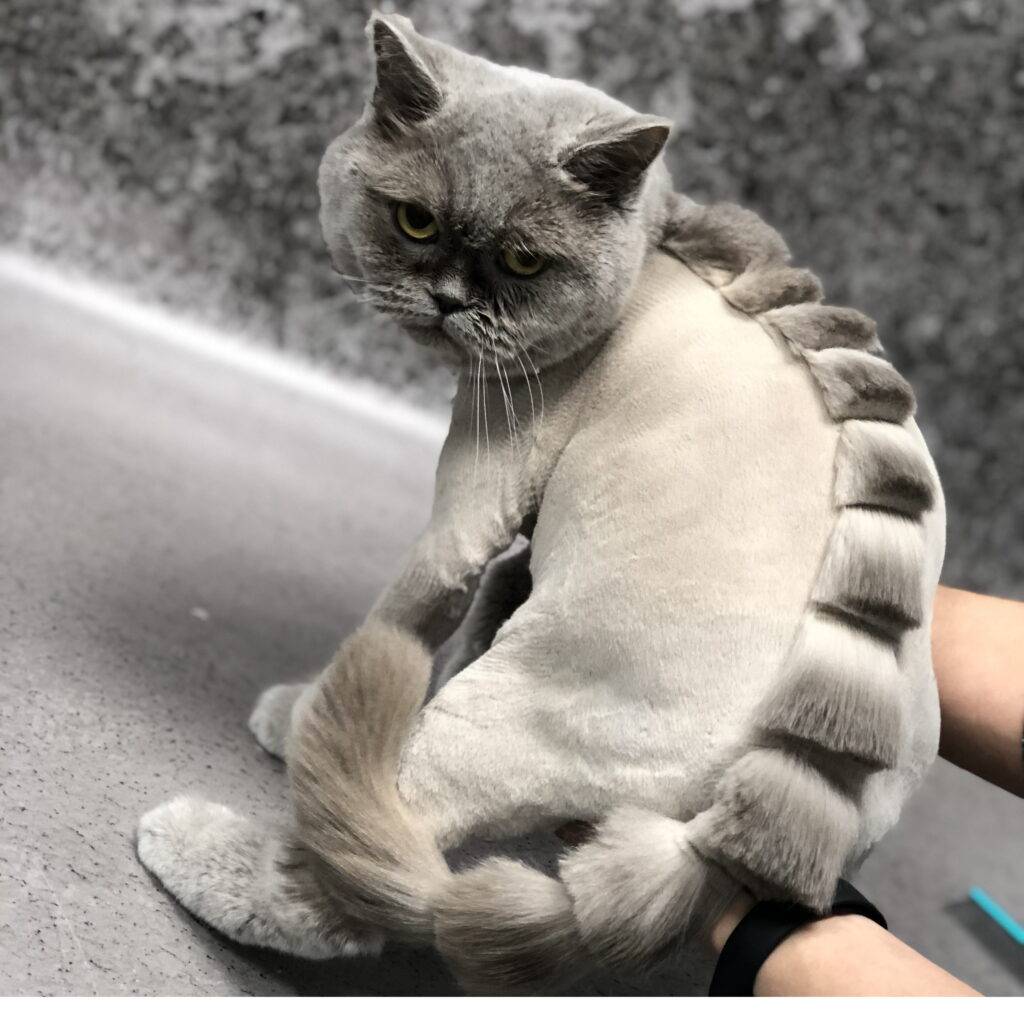
Creative cat grooming has become a real trend. Salons and mobile groomers offer it, and many owners have learned to clip their cats at home. Maine Coons are often given a “lion cut,” British Shorthairs get a ridge shaved along the back like a dragon, and groomers leave fluffy “socks” on the legs and a mane around the neck. Some enthusiasts go further, turning the coat into genuine works of art with patterns, shapes, and even pet-safe dyes and rhinestones. It can look striking. But it raises the real question worth asking: is any of this actually good for the cat?


When Is Shaving a Cat Actually Justified?
Most veterinarians discourage shaving or closely clipping cats unless there is a clear medical need. In practice, there are really only two situations where a clip makes sense.
| Situation | Why a clip may be needed |
|---|---|
| Severe mats that can’t be brushed out | Tight mats pull on the skin and trap moisture. Left in place, they can cause skin irritation, sores, and infection, and can even harbor fleas. When mats are too tight or too extensive to comb through safely, careful clipping is the humane option. |
| Preparing for surgery or a medical procedure | A veterinarian may shave a small area of fur to expose the skin for an operation, IV placement, or diagnostics. |
Notice what isn’t on that list: heat. No reputable veterinarian will tell you to shave a cat down to keep it cool in summer. That’s because the coat, even long, dense fur, is part of the cat’s own temperature-control system and its first line of defense for the skin. In cold weather, the coat holds in warmth and protects against frostbite. In hot weather, it insulates against heat and shields the skin from UV rays. For more on routine feline care, the ASPCA’s cat care resources are a reliable starting point.


It’s counterintuitive if you’re looking at a thick-coated cat on a hot day, but it’s true. Cats don’t cool themselves by sweating the way people do, so the coat does much of the work of managing temperature swings. Keep this rule in mind: if you don’t want your cat to overheat or get a sunburn, leave the shaving and creative haircuts alone.
What Can Go Wrong After a Haircut?
Shaving a cat isn’t a neutral choice. It removes a functioning layer of protection, and the consequences can outlast the season.


Sunburn. The shorter the coat, the more exposed the skin. A close shave leaves the skin vulnerable to the sun and can lead to painful sunburn, which is a real risk for cats with thin or pale coats.
Damaged regrowth. A cat’s coat isn’t built for regular clipping. After repeated haircuts, the fur can grow back thinner, more brittle, and more prone to tangling than before. Purebred cats with an incorrectly shortened coat may also be barred from shows, since breed standards for coat and appearance are tied to a cat’s overall condition and health, not just looks.
An unprotected skin barrier. The coat shields the skin, the largest organ in a cat’s body, from scrapes, environmental stress, and insect bites. Strip it away and the skin becomes far easier to injure.
Chilling in cool weather. A shaved cat can get uncomfortably cold once temperatures drop, especially indoors with air conditioning or during cooler months.
Stress. Very few cats enjoy being clipped or shaved. Some tolerate it with quiet dignity, but many find it upsetting. It’s not unusual for a cat to hide, refuse food for a while, or avoid contact after a grooming session. It’s fair to ask whether the result is worth that stress. The American Veterinary Medical Association offers helpful guidance on reducing handling stress and caring for pets at home.
The Upside, and Why It’s Really About the Owner
To be fair, haircuts do have a few practical benefits. A shorter coat is easier to maintain and needs less frequent brushing. Grooming can also help with flea control and make shedding less noticeable around the house, though it never stops shedding entirely. The catch is that every one of those benefits is a convenience for you, not something the cat needs. For the cat, there’s no upside to being shaved.

Real cat care isn’t about haircuts, shaves, and dye jobs. It’s about regular brushing, bathing when appropriate with cat-safe products, and consistent, gentle grooming. Do that, and your cat stays healthy and looks its best, no new-fangled hairstyle required. They’re at their most striking exactly as nature made them.
Frequently Asked Questions
Does shaving a cat keep it cooler in summer?
No. A cat’s coat insulates against heat as well as cold and helps manage temperature swings, since cats don’t cool off by sweating the way people do. Shaving removes that protection and can actually expose the skin to sunburn. To help a cat in hot weather, provide shade, fresh water, and a cool place to rest instead.
Are lion cuts and other creative haircuts safe?
Occasionally clipping a cat for a genuine reason, such as removing severe mats, is not harmful when done carefully. But routine “lion cuts” and decorative styles done purely for looks offer no benefit to the cat and can cause stress, sunburn, and poor coat regrowth. If you’re considering any clip, talk with your veterinarian first.
Will my cat’s fur grow back normally after shaving?
It usually grows back, but not always the same. After repeated clipping, the coat can return thinner, more brittle, and more prone to matting. Some cats also experience patchy or slow regrowth, which is one reason vets advise against shaving unless it’s medically necessary.
How should I care for a long-haired cat without cutting its coat?
Brush regularly, ideally several times a week for long-haired breeds, to prevent mats before they form. Combine that with occasional bathing using cat-safe products and check for tangles behind the ears, under the legs, and around the tail. If a mat is already too tight to brush out, ask a groomer or veterinarian to clip just that area rather than shaving the whole cat.