
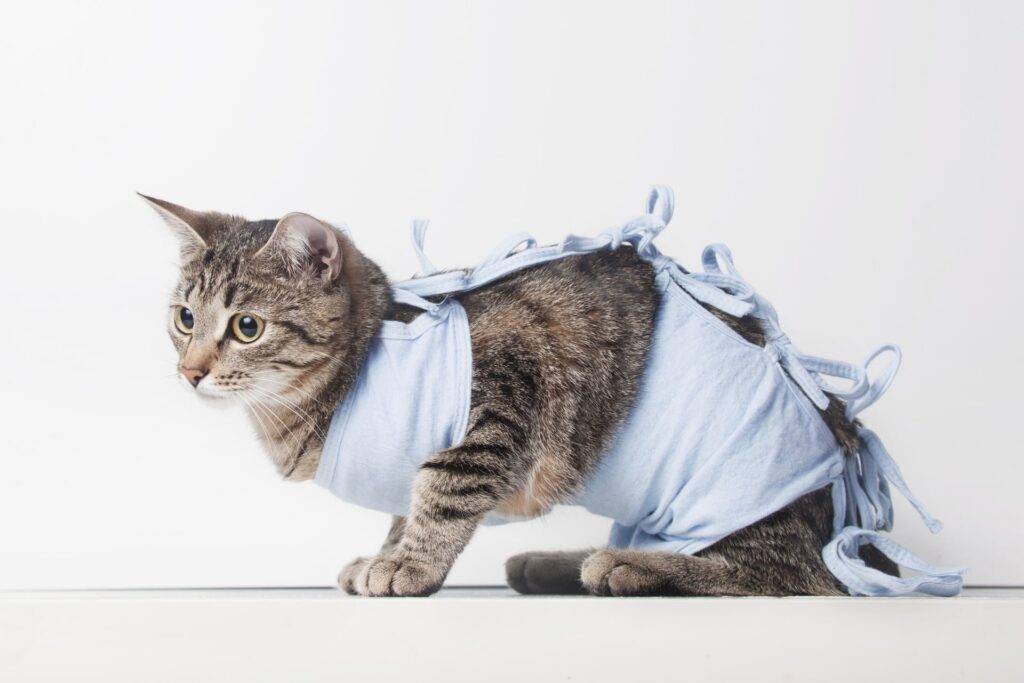
Spaying and neutering are among the most common surgeries your cat will ever have, and recovery is usually smooth. Still, the first day or two matters. The anesthesia has to wear off, the incision needs to stay clean, and your cat needs a quiet place to rest. Here is how to make that recovery period easier and safer for your companion.


Key takeaways
- Anesthesia can leave your cat groggy and uncoordinated for up to 24 hours, so keep her resting at floor level where she can’t fall.
- Keep her warm, check the incision daily, and use a recovery collar or surgical suit so she can’t lick or chew the wound.
- Offer fresh water right away, but don’t force food. Appetite usually returns within a day.
- Restrict jumping and active play during recovery, and follow your veterinarian’s instructions on any prescribed medication.
- Call your vet if you see swelling, discharge, an open incision, or your cat seems unusually lethargic.
The first 24 hours: anesthesia and a safe resting spot
The procedure is over, so what deserves your attention first? Mostly, it’s the lingering effect of the anesthesia. For up to 24 hours after surgery your cat may be drowsy and unsteady on her feet, with noticeably poor coordination. Because of that, this is not the time to let her settle on a bed, sofa, windowsill, or any other raised surface. A wobbly cat can easily misjudge the edge and fall. Set up her recovery spot directly on the floor instead, in a quiet, low-traffic room away from other pets and children.
Body temperature also tends to drop during and after anesthesia, so your cat may feel cold as she comes around. Cover her with something warm, such as a soft blanket or a folded sweater, to help her stay comfortable while the anesthesia clears. Keeping the recovery area calm, warm, and dimly lit goes a long way toward a smooth first night.


Limit activity while the incision heals
Most cats bounce back quickly after a routine spay or neuter. It’s worth knowing, though, that spaying a female is a more involved abdominal surgery than neutering a male, so females often need a little more time to recover fully. Either way, keep activity to a minimum during the healing period. Jumping, climbing, and rough play can strain the incision, so discourage your cat from leaping onto furniture and skip the wand toys until your vet gives the all-clear. The American Society for the Prevention of Cruelty to Animals recommends keeping your cat quiet and limiting her movement while the incision heals (ASPCA).
Protecting the incision from licking and chewing is just as important. A recovery collar (the classic cone) or a soft surgical suit keeps your cat from reaching the wound and pulling at the sutures. Check the incision at least once a day, especially early on, and watch for redness, swelling, gaps, or discharge. Keep the area clean and dry, and if your veterinarian recommends a wound-care product, use only what they suggest. If you notice any discharge, bleeding, or an opening in the incision, contact your veterinarian right away rather than waiting to see whether it improves on its own (AVMA).
Keep an eye on urinary health
After being spayed or neutered, some cats become less active and may drink less, which can contribute to a higher long-term risk of urinary problems such as bladder stones. The most practical thing you can do is encourage water intake and keep your cat at a healthy weight. Always provide constant access to fresh, clean water, and ask your veterinarian whether a diet formulated for urinary health is appropriate for your cat. Your vet can recommend a food that supports the right mineral balance for cats prone to struvite crystals (Cornell Feline Health Center).


Food, water, and the litter box
Give your cat free access to fresh drinking water as soon as she’s home. Don’t rush food, though. It’s normal for a cat to have little interest in eating on the day of surgery, and forcing the issue can lead to nausea. Offer a small amount of her regular food and let her eat when her appetite returns, which usually happens within 24 hours. If she still won’t eat after a day, check in with your veterinarian.
The litter box can be tricky in the first hours, and sometimes the first day or two. A groggy, sore cat may struggle to climb into a high-sided box or position herself comfortably. Switching to a low-entry box or a disposable tray makes things easier, and an absorbent pad in her resting area can catch any accidents while she’s still weak. This is completely normal during early recovery.


Once your cat is eating normally again, focus on a high-quality, balanced diet to support her recovery. If your veterinarian prescribed any medication, such as pain relief or an antibiotic, give it exactly as directed and finish the full course even if your cat seems back to her old self. Never give human pain relievers, as many are toxic to cats. Follow your vet’s discharge instructions to the letter, and don’t hesitate to call with questions.
Beyond the practical steps, the best medicine is your attention. Cats often seek out their people when they feel vulnerable, and simply being nearby, speaking softly, and offering a warm lap goes a long way. Be the steady, reassuring presence your cat needs during these few days, and she’ll be back to her confident self before you know it.
Frequently asked questions
How long does it take a cat to recover after being spayed or neutered?
Most cats are noticeably more themselves within 24 to 48 hours, but the incision usually needs about 10 to 14 days to heal fully. Female cats, who undergo a more involved abdominal surgery, may take a little longer than males. Keep activity restricted and the recovery collar on until your veterinarian confirms healing is complete.
Should I be worried if my cat won’t eat after surgery?
A reduced appetite on the day of surgery is normal, often a lingering effect of the anesthesia. Offer fresh water and a small portion of food, and let your cat eat when she’s ready. If she refuses food for more than 24 hours or seems unusually lethargic, contact your veterinarian.
How do I keep my cat from licking the incision?
Use a recovery collar (an Elizabethan cone) or a soft surgical recovery suit so your cat physically can’t reach the wound. Licking and chewing can introduce bacteria and pull out sutures, so keep the collar or suit on continuously until your vet says it’s safe to remove.
When should I call the veterinarian?
Contact your vet if you notice swelling, redness, bleeding, discharge, or an opening at the incision site, or if your cat is vomiting, refusing to eat or drink, or seems extremely weak. It’s always better to ask early than to wait on a problem that could worsen.
Will my cat’s personality or weight change after being fixed?
Spaying and neutering reduce hormone-driven behaviors like roaming, yowling, and spraying, but your cat’s core personality stays the same. Metabolism can slow afterward, so monitor portion sizes and keep your cat active to prevent weight gain. Your veterinarian can advise on feeding amounts.