
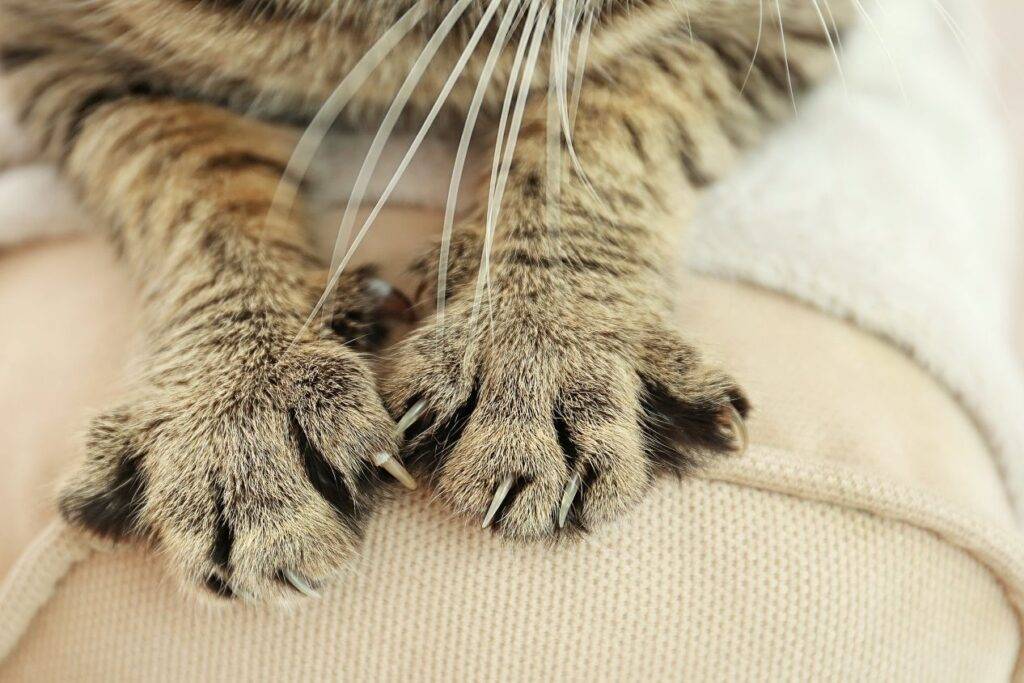
Does your cat really need a nail trim? If so, how often should you do it, and how do you keep the whole thing stress-free for both of you? Let’s walk through it together.


Key Takeaways
- Indoor cats wear their claws down far less than outdoor cats, so most need a trim about every 3 to 4 weeks.
- Use a tool designed for pets, never household scissors, which crush and split the claw.
- Trim only the clear or white tip and stay at least 2 mm away from the quick, the pink area where the blood vessel and nerve live.
- Keep sessions short, calm, and rewarding so your cat learns to tolerate (or even ignore) the routine.
- Keep styptic powder on hand in case you accidentally nick the quick.
Why Trim Your Cat’s Claws?
Outdoor cats keep their claws in shape naturally. Scratching to leave territorial scent marks, climbing trees, and traveling across rough surfaces all wear the nails down and keep them honed. Indoor cats live a softer life. They move less, walk mostly on carpet and floors, and a single scratching post often isn’t enough to file things down.
When claws aren’t worn down, they keep growing, and overgrown nails can curl back into the paw pad, causing real pain rather than just discomfort. A long claw is also more likely to snag on fabric or carpet, and a cat that catches a nail and panics can injure the toe or paw trying to pull free. Kittens are especially prone to this. Overgrown claws are hard on your furniture, wallpaper, and arms, too. The good news is that this is an easy problem to stay ahead of with the right clippers and a little practice. For a broader overview of routine at-home care, the ASPCA’s cat care guidance is a solid starting point.
How Often Should You Trim?


Every cat is different, and claws grow back at their own pace. Yours might need a touch-up once a week while a neighbor’s cat goes a month between trims, or the other way around. Keep in mind that claws don’t all grow at the same rate either, so one nail on a paw may be long and sharp while the others are still short. The front claws are usually sharper and grow faster than the back ones, so they tend to need the most attention.
As a general rule, trimming once every 3 to 4 weeks keeps most indoor cats comfortable.


How to Trim a Cat’s Claws, Step by Step
Before you start, set yourself up for an easy session. The calmer and better-prepared you are, the more your cat will follow your lead.
- Use the right tool. Ordinary nail clippers, even good ones, aren’t built for this. A cat’s claw is layered and curved, unlike a human nail, so household scissors tend to crush it and make it crumble and split. A clipper designed for a cat’s anatomy, made from quality steel with a clean cutting edge, does the job neatly. Pet clippers come in a few styles, and the right one depends mostly on your cat’s temperament (more on each below).
- Get good lighting. Set up where you can clearly see inside each claw. You need to be able to spot the pink quick to know where to stop.
- Settle your cat first. A relaxed, content cat is far easier to work with. Don’t rush, and stay calm and steady so your cat picks up on your confidence rather than your nerves.
- Hold your cat in a comfortable position. You can do this solo or with a helper, depending on your cat. Some cats doze right through a trim, some need one hand to steady them, and some treat it like a wrestling match. Watch out for both your safety and your cat’s. If your cat struggles hard, gently wrap them in a towel or blanket, leaving one paw out at a time, so they can’t scratch or bolt.
- Press the pad to extend the claw, then clip. Gently squeeze the toe pad to push the claw out, then cut each one carefully without touching the quick, the pink section visible inside the clear nail. Stay at least 2 mm away from it. The quick contains a blood vessel and a nerve, so cutting into it bleeds and hurts.
- Reward your cat. When you’re done, praise your cat and offer a treat. A good experience now makes the next trim much easier.


If you do nick the quick, don’t panic. Clean the spot, apply gentle pressure with gauze, and use a styptic powder or pencil to stop the bleeding. If bleeding doesn’t stop within a few minutes, contact your veterinarian.
For more on what the quick is and how to recognize it, the Cornell Feline Health Center is a trustworthy reference on feline anatomy and home care.


A Closer Look at Trimming Tools
There’s no single best clipper, only the one that suits your cat and your comfort level. Here’s how the main options compare.
| Tool | Best for | How it works | Keep in mind |
|---|---|---|---|
| Scissor-style clippers | Kittens and small cats | Compact, scissor-shaped clippers shaped to the curve of the claw | Easy and gentle for thin kitten nails; may be too small for thick adult claws |
| Plier-style clippers | Adult cats (the classic choice) | Spring-loaded handles bring two blades together for a clean cut | Look for a built-in nail guard and non-slip grips; sharp steel keeps the cut painless |
| Guillotine clippers | Calm, trim-tolerant cats | The claw sits in a hole, and squeezing the handle drops a blade through it | Fast and smooth, but slower to pull off the claw, so a wiggly cat raises the injury risk |
| Nail grinder | Owners nervous about cutting too far | A rotary file, like a small electric emery board, sands the tip down gradually | Hardest to overcut; cordless models with speed settings suit cats, and it works on dogs and small pets too |


Whichever tool you choose, the goal is the same: build a routine your cat associates only with calm handling and treats. The more pleasant you make it, the simpler grooming becomes over your cat’s whole life.


Frequently Asked Questions
What happens if I accidentally cut the quick?
The claw will bleed and your cat will feel a sharp pinch. Stay calm, apply gentle pressure with gauze, and use a styptic powder or pencil to stop the bleeding quickly. It looks dramatic but is rarely serious. If bleeding continues for more than a few minutes, call your veterinarian. For general first-aid guidance, the AVMA’s pet owner resources are a reliable reference.
Do I need to trim my cat’s back claws?
The front claws grow faster, stay sharper, and do most of the scratching, so they need attention most often. The back claws still grow and should be checked at each session, but they usually need trimming less frequently.
My cat hates having its paws touched. What can I do?
Go slowly and build the habit over time. Handle the paws gently during calm moments, reward your cat for tolerating it, and start with just one or two nails per session instead of all of them at once. A towel wrap can help with squirmy cats. If trims remain a real fight, your vet or a professional groomer can do it safely.
Should I declaw my cat instead of trimming?
No. Declawing is not a nail trim; it amputates the last bone of each toe and can lead to lasting pain and behavior problems. Many veterinary organizations strongly discourage it. Regular trimming, scratching posts, and patience are the humane alternatives. Talk with your veterinarian if scratching is a persistent problem.
The Bottom Line
Trimming your cat’s nails is a small, routine task that prevents pain, snagged claws, and shredded furniture. Use a tool that fits your cat, clip only the tip while keeping a safe margin from the quick, and finish every session with a reward. Stay consistent every few weeks and it quickly becomes a quiet, two-minute habit instead of a battle.