
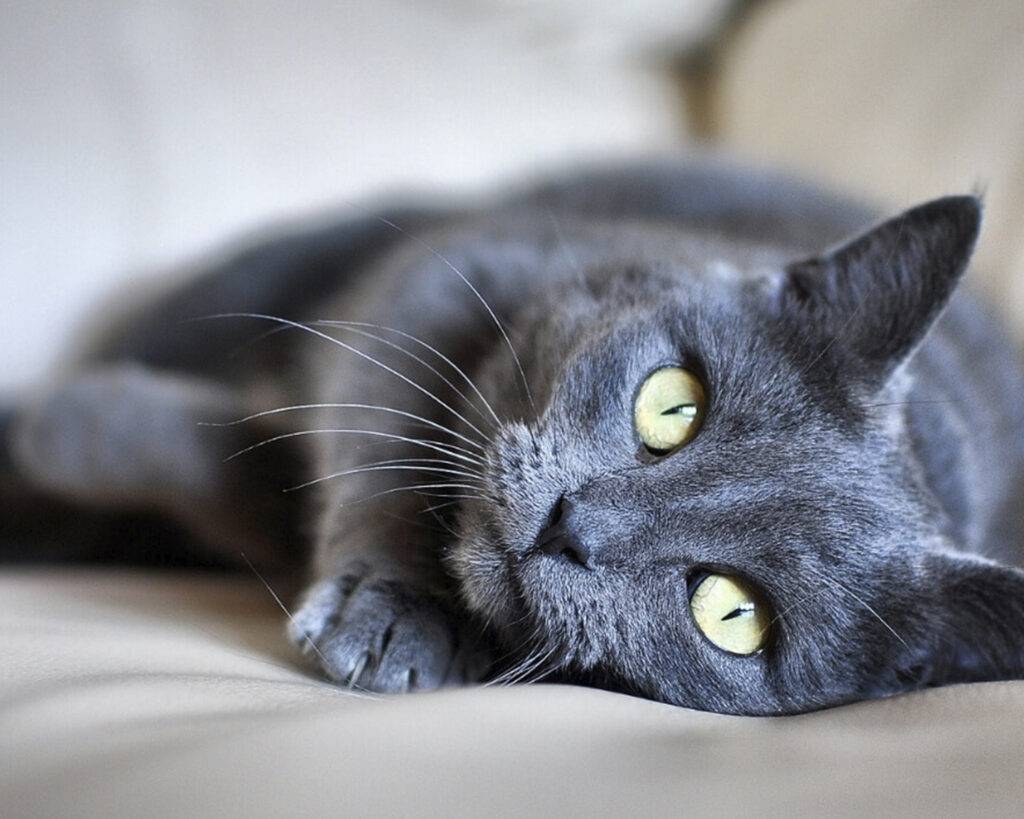
The Korat is a graceful, silver-blue cat with luminous green eyes and a quietly devoted nature. Native to Thailand, where it has been kept and treasured for centuries as a bringer of good fortune, this rare breed thrives in a calm home where it can form a close bond with its chosen people. If you want a loyal, intelligent companion that prefers depth of attachment over crowd-pleasing antics, the Korat may be an ideal match.
Quick Facts
| Origin | Thailand |
|---|---|
| Size | Small to medium (males 7.7–11 lb / 3.5–5.0 kg; females 5.5–8.8 lb / 2.5–4.0 kg) |
| Coat | Short, single, solid silver-blue only |
| Body type | Semi-cobby, muscular |
| Lifespan | 10–15 years, often longer |
| Temperament | Affectionate, intelligent, loyal, reserved with strangers |
| Activity level | Moderate |
| Vocalization | Moderate |
| Grooming needs | Low |
| Good with children | Yes, with respectful kids |
| Good with other pets | Moderate; prefers a calm introduction |
| Hypoallergenic | No |
| Recognized by | CFA, TICA, FIFe, WCF |


Appearance
The Korat is a small to medium-sized cat with a muscular, semi-cobby build that feels surprisingly heavy for its size when you pick one up. Adult males typically weigh 7.7 to 11 pounds (3.5 to 5.0 kg) and females 5.5 to 8.8 pounds (2.5 to 4.0 kg). The breed’s defining feature is its single, solid silver-blue coat: short, fine, and close-lying, with no undercoat. Each hair is darker along the shaft and tipped with silver, giving the cat a shimmering halo in good light.
The head is heart-shaped when viewed from the front, with a gently rounded forehead and a slightly curved profile. The ears are large and set high on the skull, with softly rounded tips. The eyes are a hallmark of the breed — large, round, and prominent. Mature adults show a luminous peridot or emerald green; kittens and young cats often display amber tones, with the final color settling at around two years of age. The legs are well proportioned, the paw pads are dark blue to lavender with a pink cast, and the medium-length tail tapers to a rounded tip. According to the Cat Fanciers’ Association breed standard, the Korat is shown in only one color, and outcrossing to other breeds is not permitted.
Personality


Korats are intelligent, observant, and deeply attached to their people. They tend to bond closely with one or two family members and follow them quietly from room to room rather than demanding constant attention. With strangers and unfamiliar pets they are typically reserved, preferring to assess a situation before approaching — a thoughtful temperament rather than a timid one.
Within the family, the Korat is affectionate and playful. It enjoys interactive games, naps in a warm lap, and a scratch behind the ears, which it answers with a steady purr. Loud, chaotic households can stress the breed, so it does best where the daily routine is calm and predictable. Korats coexist well with respectful children and other pets, but they like to set their own pace for new introductions and dislike being left alone for long stretches.
Health


The Korat is generally a hardy, long-lived breed, with most cats reaching 10 to 15 years and many living comfortably beyond that with good care. The most important health concern is a hereditary risk of GM1 and GM2 gangliosidosis, two related neurological storage disorders that cause progressive decline in affected kittens. A reliable DNA test for the responsible mutations is available, and responsible breeders screen all breeding cats and guarantee against the condition. Inherited diseases like these are exactly why veterinary geneticists, including researchers at the Cornell Feline Health Center, emphasize DNA screening of breeding stock. Ask to see both parents’ test certificates before committing to a kitten.
Beyond this, routine preventive care covers most needs: annual veterinary check-ups, core vaccinations, dental care, and parasite control. Keeping the cat at a healthy weight on a balanced, age-appropriate diet supports long-term wellbeing.
Care
Grooming is straightforward. The single, close coat sheds lightly and only needs a weekly comb-through with a soft brush or grooming mitt to lift loose hairs and keep the silver tipping bright. Bathing is rarely necessary; a wipe with a damp cloth between brushings is usually enough. Trim the nails every two to three weeks, and check the ears regularly, cleaning them only when visibly dirty.
Mentally, the Korat needs more engagement than its quiet manner suggests. Puzzle feeders, a sturdy cat tree, and short positive-reinforcement training sessions suit the breed’s intelligence and prevent boredom. Because Korats dislike long absences, a consistent daily routine and steady human company — or, ideally, a calm feline companion raised alongside it — make a real difference to its happiness.
History
The Korat is one of the world’s oldest documented natural breeds. It appears in the Tamra Maew, the Thai “Cat-Book Poems” thought to date from the Ayutthaya kingdom (14th–18th centuries), where it is celebrated as the Si-Sawat — a name borrowed from a seed of the same silver-grey color and long associated with prosperity. Traditionally, pairs of Korats were given as wedding gifts to wish a couple good fortune and a harmonious home.
The breed first reached the West in the late 19th century, when blue cats from Siam were shown in Britain alongside other Siamese varieties. Modern recognition followed the arrival of a breeding pair in the United States in 1959. The CFA accepted the Korat in 1966, TICA granted it championship status in 1979, and FIFe recognized the breed in 1972. Today the Korat remains uncommon outside dedicated breed circles, with the largest populations in the United States, Europe, and its Thai homeland.
Frequently Asked Questions
Are Korat cats hypoallergenic?
No. The Korat’s short, single coat sheds less visible hair than a double-coated breed, but no cat is truly hypoallergenic. Cat allergies are usually triggered by the Fel d 1 protein in saliva and skin, which all cats produce, so a Korat can still cause reactions in sensitive people.
How much grooming does a Korat need?
Very little. A weekly brushing with a soft brush or grooming mitt is enough to remove loose hairs and keep the silver tipping bright. Add nail trims every two to three weeks and occasional ear checks, and the coat will look after itself the rest of the time.
Are Korats good for first-time cat owners?
They can be, provided the home is calm. Korats are affectionate, clean, and easy to groom, which suits a first-time owner, but they bond intensely and dislike being left alone for long days. They do best with someone who is home regularly or who can provide a steady feline companion.
What is the main health condition in Korats?
The breed’s primary inherited concern is GM1/GM2 gangliosidosis, a pair of neurological storage disorders. A DNA test identifies carriers, so a responsible breeder will screen both parents and provide a written health guarantee. Always ask to see those test results before buying a kitten.
Why are Korat cats considered rare?
Registries do not permit outcrossing the Korat to other breeds, and it is shown in only one color, so the gene pool and breeding population stay small. The breed is uncommon even in Thailand, which keeps numbers limited worldwide.