
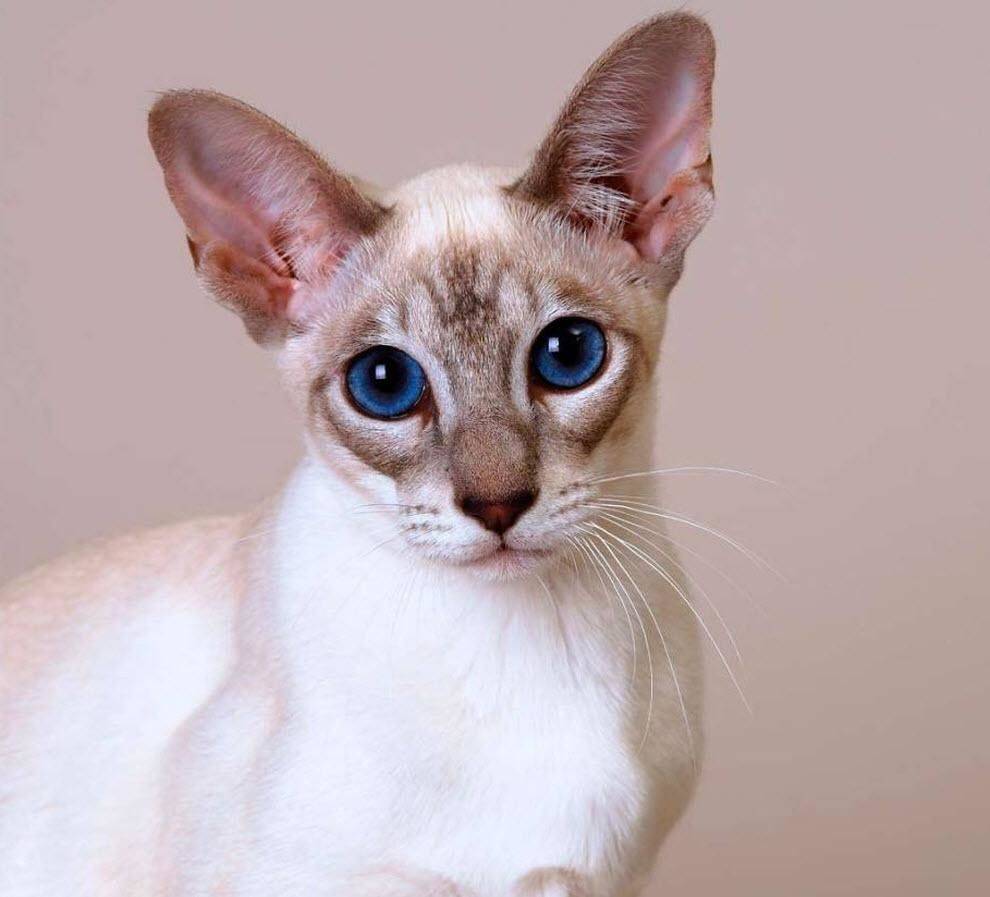
The Siamese is one of the world’s most recognizable cats: an elegant, talkative companion whose striking pointed coat and brilliant blue eyes have captivated cat lovers for generations. Originating in the kingdom of Siam (modern-day Thailand), this slim, oriental-bodied breed pairs an aristocratic look with an exuberant, almost dog-like devotion to its people. If you want a cat that talks back, follows you from room to room, and insists on being part of everything you do, the Siamese delivers in full.
Quick Facts
| Origin | Thailand |
|---|---|
| Size | Medium (males 8–12 lb / 3.5–5.5 kg, females 5.5–9 lb / 2.5–4.0 kg) |
| Coat | Short, fine, close-lying; pointed pattern |
| Common colors | Seal, blue, chocolate, and lilac point |
| Body type | Oriental (long and lithe) |
| Lifespan | 12–20 years |
| Temperament | Vocal, affectionate, intelligent, demanding |
| Activity level | High |
| Grooming needs | Low |
| Good with kids & pets | Yes, with proper introductions |
| Recognized by | CFA, TICA, FIFe, WCF |


Appearance
Siamese cats are unmistakable. Adults are medium in size, with males typically weighing 8 to 12 pounds and females 5.5 to 9 pounds. The body is long, lithe, and finely muscled—the classic oriental type—carried on slender legs and finished with a long, whip-like tail that tapers to a fine point.
The head is a long, sculpted wedge framed by large, wide-set ears that continue the triangular line of the face. The almond-shaped eyes, set on a slight slant, glow a vivid sapphire blue that is one of the breed’s defining traits.


The coat is short, fine, glossy, and lies close to the body, with very little undercoat. Every Siamese carries the colorpoint pattern: a pale body that contrasts with darker “points” on the mask, ears, legs, and tail. This pattern is temperature-sensitive—the cooler extremities develop pigment while the warmer core stays light—which is why kittens are born almost white and darken as they grow. The four traditional colors are seal point, blue point, chocolate point, and lilac point, with red, cream, tortie, and tabby (lynx) points also accepted in many registries. Within the breed, fanciers distinguish the slim, modern show type from the rounder, sturdier traditional or “applehead” type still kept by some hobbyists.
Personality


Siamese cats thrive on attention. They are outgoing, intensely social, and famous for their loud, expressive voices—a Siamese will happily “discuss” the day with you, demand a role in every household activity, and trail family members from room to room. They love interactive play, pick up tricks quickly, and often bond closely with children.
This breed forms strong attachments and dislikes being left alone for long stretches. A Siamese left without company for most of the day is prone to boredom, anxiety, and destructive behavior, so it does best in a home where someone is around often, or where a second cat can keep it engaged. Many owners find that Siamese are happiest in pairs.
Siamese can be possessive of their favorite person and may be slow to share that bond with other pets, though most adapt well when introductions are gradual and positive. Expect a confident, opinionated cat that will cheerfully run the household if you let it.


Health
Siamese are generally healthy and long-lived, with many cats reaching 15 to 20 years of age when well cared for. Like all pedigreed breeds, though, they carry a handful of conditions worth knowing about. The breed is predisposed to amyloidosis, a hereditary protein-deposition disease that most often affects the liver, as well as progressive retinal atrophy (PRA), feline asthma, and dental problems such as gingivitis. The Cornell Feline Health Center notes that the Siamese is among the breeds with an increased risk of progressive retinal atrophy, a degenerative eye disease that can lead to blindness. Their slim build and short coat also mean they tolerate cold poorly, so indoor living is strongly recommended. The American Veterinary Medical Association advises keeping pets on a regular schedule of wellness exams so problems are caught early. Choosing a breeder who screens parent cats for hereditary disease and provides a written health guarantee is the best way to start with a sound, healthy kitten.
Care
Day-to-day care is refreshingly simple. The short, close-lying coat needs only a weekly brush or a wipe with a soft cloth to remove loose hairs and bring up the shine; bathing is rarely necessary outside of show preparation. What the Siamese really needs is mental stimulation—puzzle feeders, climbing trees, daily interactive play, and ideally a feline or human companion at home. A balanced, high-protein diet supports the breed’s active metabolism, and routine dental care helps prevent the gum disease Siamese are prone to. The ASPCA recommends brushing your cat’s teeth and scheduling regular grooming and dental checks as part of a healthy routine.
History
The Siamese is one of the oldest recognized cat breeds, native to the ancient kingdom of Siam (now Thailand). Pointed cats matching the modern description appear in a Thai manuscript known as the Tamra Maew (Cat-Book Poems), parts of which are believed to date from somewhere between the 14th and 18th centuries—evidence that the breed has existed in something close to its current form for hundreds of years. In their homeland, Siamese cats were traditionally linked to temples and royal households.


The breed reached the West in the late 19th century, making its public debut at the Crystal Palace cat show in London in 1871, and a celebrated pair was gifted to a British diplomat in Bangkok in 1884. The first Siamese standard was adopted in 1892. Early imports were stockier and rounder than today’s show cats; decades of selective breeding produced the more refined, extreme look now seen in the show ring, while the traditional type is preserved by enthusiasts under names such as Thai or Old-Style Siamese. The breed is recognized today by major registries including the Cat Fanciers’ Association, The International Cat Association, Fédération Internationale Féline, and the World Cat Federation. Either way, the Siamese remains one of the most popular pedigreed cats in the world.
Frequently Asked Questions
Are Siamese cats hypoallergenic?
No cat is truly hypoallergenic. Siamese have a short, low-shedding coat that can mean somewhat less loose dander floating around the home, but they still produce the Fel d 1 protein that triggers most cat allergies. Allergy-prone people should spend time with the breed before committing.
Why are Siamese cats so vocal?
Vocalization is a hallmark of the breed. Siamese are highly social and use their distinctive, often loud voice to communicate with their people—asking for attention, food, play, or simply narrating their day. If you prefer a quiet cat, the Siamese is probably not the right match.
Do Siamese cats need a companion?
Many do. Because they bond so strongly and dislike being alone, Siamese left by themselves for long workdays can become bored and anxious. A second cat or a household where someone is home often goes a long way toward keeping them content.
How long do Siamese cats live?
With good care, Siamese are notably long-lived, commonly reaching 15 to 20 years. Indoor living, a quality diet, regular veterinary checkups, and routine dental care all help them reach the upper end of that range.