
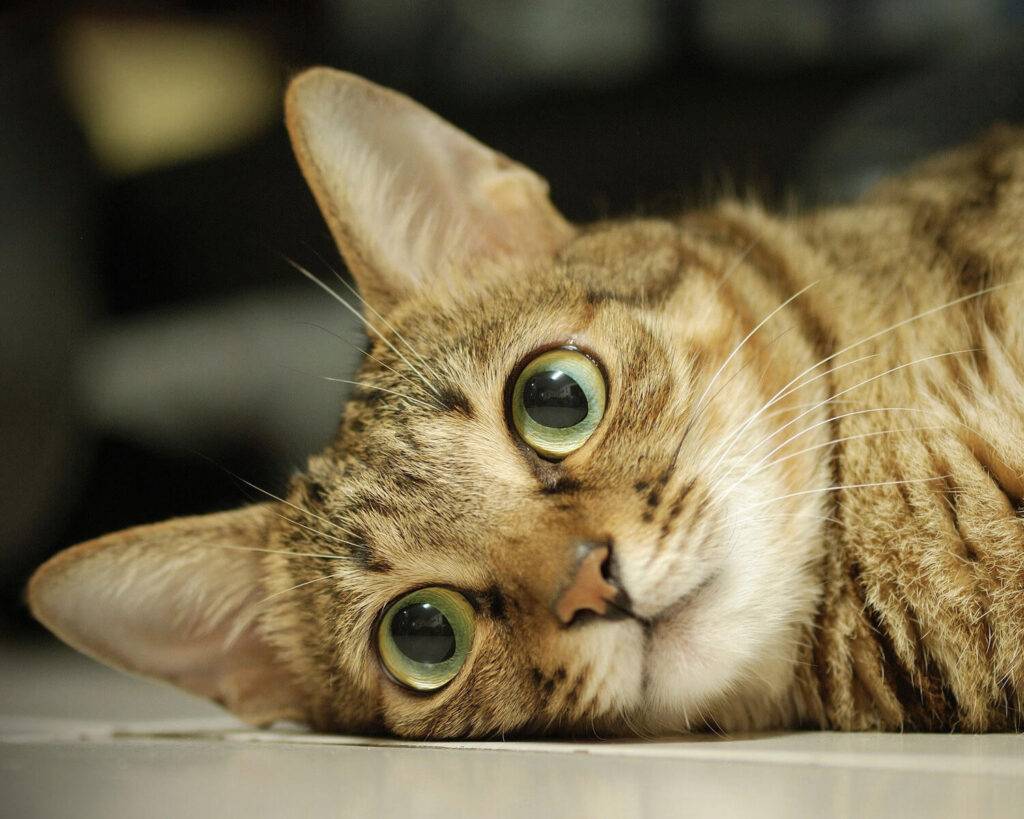
The Sokoke is a strikingly marbled shorthair native to the coastal forests of Kenya. Despite its wild looks and the hardy, free-roaming ancestors that gave rise to the breed, the Sokoke is a devoted, sensitive companion that bonds closely with its family. It is an athletic, endlessly curious cat best suited to people who appreciate grace and motion in equal measure.
Key Takeaways
- The Sokoke is a rare, naturally marbled shorthair that descends from a free-roaming Kenyan landrace.
- It is highly active and athletic — a climber and explorer rather than a lap cat.
- Despite its wild appearance, it is loyal and affectionate, and it gets along with respectful children, other cats, and dogs.
- The short, low-undercoat coat makes grooming simple: a weekly brush is usually enough.
- The breed is generally hardy but dislikes cold, so it appreciates a warm, draft-free home.
Quick Facts
| Origin | Kenya |
|---|---|
| Size | Medium (males 7.7–11 lb / 3.5–5.0 kg, females 5.5–8.8 lb / 2.5–4.0 kg) |
| Coat | Short — brown classic (blotched) tabby |
| Body type | Semi-foreign |
| Lifespan | 9–15 years |
| Temperament | Active, independent, loyal, athletic |
| Activity level | High |
| Vocalization | Moderate |
| Grooming needs | Low |
| Good with children | Yes |
| Good with other pets | Yes |
| Hypoallergenic | No |
| Recognized by | FIFe, WCF |


Appearance
Also known as the African Shorthair or Khadzonzo, the Sokoke is an elegant, medium-sized cat with a beautifully marbled coat and large, expressive eyes. The build is slim and balanced rather than heavy, with strong bones, long legs, and an athletic outline that hints at its forest-dwelling origins.
The head is a modified wedge that looks small in proportion to the body, with high cheekbones, a neat muzzle, a medium-length nose, and a firm chin. The eyes are large and almond-shaped, ranging from amber to light green. The ears are medium in size with slightly rounded tips, and lynx-like tufts at the tips are considered desirable. The tail is medium-long and tapers to a fine point.
The coat is short, glossy, and dense, with very little or no undercoat. The classic blotched tabby pattern, often described as resembling tree bark, is the breed’s signature, finished off by a black tail tip.


Personality
The Sokoke is something of a household cougar: graceful, agile, active, and independent. These cats climb beautifully, are surprisingly capable swimmers, and explore their surroundings with relentless enthusiasm. If you are looking for a lap cat, the Sokoke is not the right match — this little hunter is almost always in motion, leaping, running, and inventing new games.
At the same time, Sokokes are deeply loyal. They form strong bonds with their owner and the wider family, get along well with other cats and even dogs, and are usually patient with respectful children. They are attentive without being clingy, and they read the household well enough to leave you alone when you are busy.
The breed adapts readily to different living situations. A spacious apartment with plenty of climbing structures will work, but Sokokes are happiest in a home with secure outdoor access where they can patrol a garden and burn off their considerable energy.


Health
Sokokes are warmth-loving cats and can be sensitive to cold; they appreciate draft-free homes and cozy sleeping spots. Overall, the breed is robust, with few documented hereditary conditions — partly because breeders have worked carefully to broaden the gene pool and avoid inbreeding from a small founding population.
As with any active cat, the basics matter most: regular veterinary check-ups, a complete and balanced diet, and year-round parasite prevention. Routine wellness exams help catch problems early, and your veterinarian can tailor a vaccination and preventive-care schedule to your cat’s lifestyle (see the ASPCA’s general cat-care guidance and the Cornell Feline Health Center for trustworthy background). With good care, Sokokes typically live 9–15 years.
Care
The Sokoke’s short, sleek coat has minimal undercoat, which makes grooming refreshingly simple. A weekly brush is usually enough to remove loose hair and keep the coat shiny, and because these cats are fastidious self-groomers, they tend to look tidy without much help.
Beyond brushing, care follows the standard feline routine: check and clean the ears as needed, trim the claws regularly, keep up with vaccinations and parasite control, and schedule preventive vet visits. Because the Sokoke is so active, give it plenty of vertical space, sturdy scratching posts, and interactive toys; clicker training or harness walks are great ways to channel that energy. For more on routine preventive care, the American Veterinary Medical Association offers helpful pet-owner resources.


History
The Sokoke originates in the Arabuko-Sokoke Forest on the coast of Kenya, where its ancestors — a local landrace known as Khadzonzo, meaning roughly “looks like tree bark” — lived semi-wild, climbing trees, hunting insects and small prey, and remaining surprisingly comfortable around people.
In 1978, Jeni Slater, an Englishwoman living in Kenya, took in a Khadzonzo queen and her kittens. A short time later, her friend Gloria Moeldrup brought two kittens from the colony back to Denmark, where the foundation breeding work began. Subsequent imports broadened the gene pool, while careful breeding programs worked to avoid inbreeding.


The breed was first recognized in Denmark and gained international FIFe championship status in 1993, with the World Cat Federation following soon after. The Sokoke remains one of the rarest pedigreed cats in the world — a living link to the Kenyan forest landrace that still carries an unmistakably wild appearance alongside the affectionate temperament of a true companion cat.
Frequently Asked Questions
Are Sokoke cats rare?
Yes. The Sokoke is considered one of the rarest pedigreed cat breeds in the world. It descends from a small founding population of Kenyan landrace cats, and breeding numbers remain limited, so finding a kitten often means joining a waitlist with a registered breeder.
Are Sokoke cats good family pets?
They can be excellent family companions. Sokokes are loyal and people-oriented, and they generally get along with respectful children, other cats, and even dogs. Just keep in mind that they are highly active explorers rather than quiet lap cats, so they do best in homes that can give them plenty of play and stimulation.
Do Sokoke cats need a lot of grooming?
No. The short coat has little to no undercoat, so a weekly brush is usually enough to keep it healthy and glossy. Sokokes are also diligent self-groomers, which keeps overall maintenance low.
Are Sokoke cats hypoallergenic?
No. No cat breed is truly hypoallergenic. While the Sokoke’s low-shedding coat may mean less hair around the home, it still produces the allergens that affect sensitive people, so it is not a guaranteed match for allergy sufferers.
Can a Sokoke live happily in an apartment?
Yes, provided you meet its energy needs. A roomy apartment with tall cat trees, scratching posts, and interactive toys can work well. Many owners also add enrichment through clicker training or supervised harness walks, since this athletic breed thrives when it has room to climb and explore.