
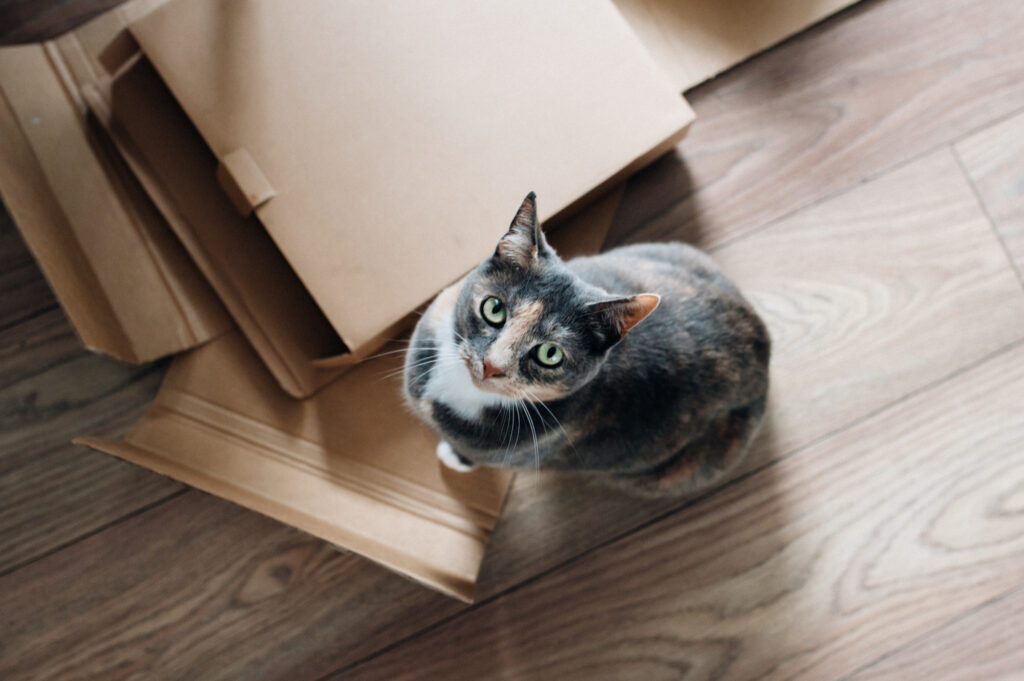
Cats have an innate affinity for boxes, and there are several reasons why they are drawn to these seemingly simple objects:
Security and Comfort: Boxes provide a sense of security and safety for cats. The enclosed space gives them a cozy and confined area where they can retreat and feel protected. It serves as a comforting den-like environment that satisfies their instinctual need for a secure hiding spot.
Temperature Regulation: Cats are known for their ability to regulate body temperature, and boxes can assist with this. The enclosed space helps trap their body heat, creating a warm and snug environment during cooler periods.
Observation and Predatory Behavior: Cats are natural hunters, and boxes offer them a vantage point to observe their surroundings without being fully exposed. Being inside a box allows them to stalk and pounce on imaginary prey, mimicking their instinctual predatory behavior.
Scent Retention: Cats have scent glands in their cheeks, and rubbing against the sides of a box leaves their scent behind. This scent-marking behavior helps them feel more secure in their territory and reinforces their ownership of the box.
Stress Reduction: Boxes can provide a sense of comfort and relieve stress for cats, especially in new or unfamiliar environments. The enclosed space offers a retreat where they can retreat and feel more at ease during times of anxiety or change.
Play and Entertainment: Boxes can also be a source of amusement. They can jump in and out, hide and surprise each other, or engage in interactive play with toys placed inside the box. Boxes add an element of fun and stimulation to a cat’s environment.
It’s important to note that individual cat preferences may vary, and not all cats are attracted to boxes. However, for many feline companions, a simple cardboard box can offer endless entertainment and comfort. So, the next time you see your cat curled up in a box, remember that it’s their natural instinct and desire for security and play that draws them to these intriguing spaces.

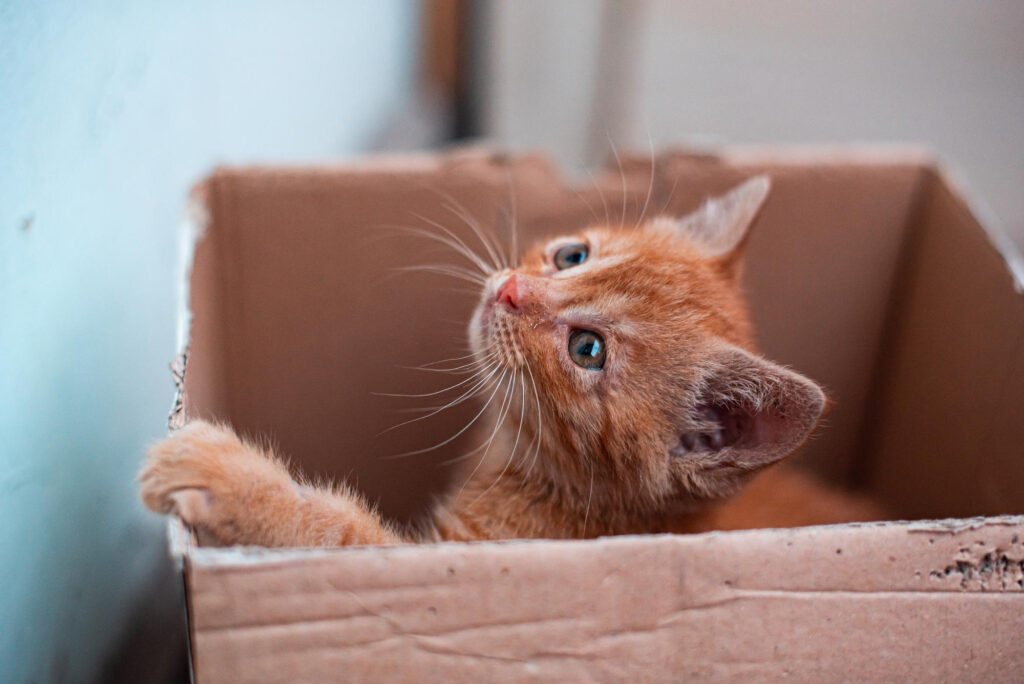
To make it safe for cats to chew on boxes:
Choose Safe Materials: Opt for boxes made of non-toxic materials, such as plain cardboard, without any adhesives or chemicals. Avoid boxes with plastic coatings or sharp edges that could pose a choking hazard.
Remove Potential Hazards: Before allowing your cat to interact with a box, remove any staples, tape, or loose pieces that could be ingested or cause harm.
Supervise and Monitor: It’s important to supervise your cat when they are playing or chewing on a box. Keep an eye out for any signs of excessive chewing or ingestion, as this can lead to gastrointestinal blockages. If you notice your cat attempting to eat or swallow parts of the box, redirect their attention to a more appropriate toy or object.
Provide Alternative Chew Toys: To redirect their chewing behavior, offer safe and suitable chew toys specifically designed for cats. This can help satisfy their natural urge to chew while minimizing the risk of ingesting harmful materials.