
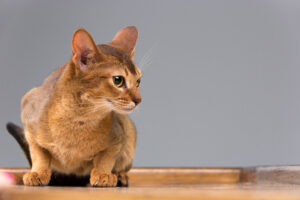
With their warm golden coats, wild-type ticked markings, and bright yellow-green eyes, Ceylon cats look like a little piece of the tropics curled up on your couch. This naturally occurring breed from the island of Sri Lanka is prized for sturdy health, an easygoing nature, and a sociable, playful temperament that makes it a delightful companion.

Quick Facts
| Other names | Sri Lankan cat |
|---|---|
| Origin | Sri Lanka (South Asia) |
| Size | Medium |
| Coat | Short, fine, silky; golden with a ticked (agouti) pattern |
| Eye color | Yellow-green |
| Temperament | Friendly, curious, playful, affectionate |
| Grooming needs | Low; weekly brushing |
| Typical lifespan | 13–18 years |
| Recognition | World Cat Federation (WCF) |
Appearance
The Ceylon is a medium-sized cat with a short, fine, silky golden coat. Its large, slightly oblique eyes are a vivid yellow-green and sit in an almond-shaped contour that gives the face an alert, intelligent expression. The body is compact and well muscled, carried on strong bones and limbs of moderate length, so the cat feels surprisingly solid for its size.
The head is medium-sized with a clear transition from forehead to muzzle and gently rounded cheeks. The ears are medium to large, set high and wide apart, with rounded tips; light lynx-like tufts on the outer edges are considered desirable. The tail is comparatively short and tapers to a rounded tip.
What truly sets the breed apart is its pattern. Dark agouti (ticked) bands run along the back, sides, and chest, while the forehead carries a marking often compared to the hood of a cobra. Two or three dark bands cross each cheek, and classic wild-type rings appear on the legs and tail. The overall impression is of a sturdy, athletic cat whose silky coat and unmistakable markings hint at its wild-living ancestry.
Personality
Ceylon cats are friendly and affectionate, and they genuinely enjoy human company. Many will follow their owners from room to room, supervise daily chores, and ask for attention with an easy confidence. They are naturally curious, too, and like to investigate new objects, smells, and overlooked corners of the home.
This is also a playful breed with strong hunting instincts. A Ceylon will happily chase toys, pounce on toy mice, and stalk anything that moves, setting off on small adventures around the house every day. At the same time, these cats are loyal and form close bonds with the people they trust, which makes them rewarding companions for an attentive household.
Ceylons tend to adapt well to new environments, a trait that suits families who travel or relocate occasionally. To keep that bright mind engaged, rotate a few enrichment options rather than relying on a single toy:
- Interactive toys: puzzle feeders, treat balls, and fishing-pole toys tap into the hunting instinct and provide mental stimulation.
- Laser pointers: a fun way to burn energy—just never shine the beam directly into your cat’s eyes.
- Cat trees and scratching posts: Ceylons love to climb, scratch, and survey their territory from above.
- Hide-and-seek: tucking treats or toys around the house lets your cat hunt them down as enrichment.
- One-on-one play: a feather wand, a tossed ball, or quiet petting all strengthen the bond between cat and owner.
Experiment with different toys and games to learn what your cat likes best, since preferences vary from one Ceylon to the next.
Health
Ceylon cats are widely regarded as a robust natural breed. With good care, a balanced diet, and routine veterinary attention, the typical lifespan is about 13 to 18 years. No breed is immune to illness, though, and a handful of conditions are worth keeping on your radar.
Like many indoor cats, Ceylons can gain excess weight if they are overfed or under-exercised. Obesity is one of the most common nutrition-related problems in pet cats and contributes to other health issues, so measured meals and daily play matter (ASPCA). Dental disease is another concern shared by cats in general: gingivitis, tartar buildup, and bad breath are common, and routine dental checks paired with at-home brushing reduce the risk (Cornell Feline Health Center).
Owners should also watch for feline lower urinary tract disease (FLUTD), an umbrella term for several conditions that can cause painful or frequent urination and blood in the urine; a cat straining to urinate or unable to pass urine is a medical emergency that warrants same-day veterinary care (Cornell Feline Health Center). Finally, parasites such as fleas, ticks, and intestinal worms are a risk for any cat, so year-round preventatives and regular deworming are simple, worthwhile insurance.
The bottom line is that the Ceylon is generally healthy, and consistent preventive care is the best way to support a long, comfortable life.

Care
Caring for a Ceylon is refreshingly straightforward, which is a big part of the breed’s appeal. The short, fine coat is essentially self-cleaning, so a weekly brushing is usually enough to remove loose hair and keep it glossy. Beyond grooming, the day-to-day routine comes down to good food, fresh water, a clean litter box, and a little play:
- Feeding: offer a balanced diet suited to your cat’s age, weight, and activity level. Your veterinarian can recommend a food and portion size for your individual cat.
- Hydration: keep fresh, clean water available at all times. Many cats drink more readily from a pet fountain.
- Litter box: Ceylons are fastidious and prefer a clean tray, so scoop daily and wash the box regularly.
- Playtime: daily interactive play keeps your cat physically fit and mentally engaged.
- Health checks: annual veterinary exams and up-to-date vaccinations help catch problems early. Address any change in appetite, weight, or behavior without delay.
In short, the Ceylon is a relatively low-maintenance companion. A balanced diet, fresh water, a clean litter box, regular play, and routine veterinary care cover the essentials.
History
Ceylon cats, also known as Sri Lankan cats, originated on the island of Sri Lanka in South Asia. They developed as a natural population, shaped by the local climate rather than by deliberate human breeding programs, which helps explain their hardy constitution and consistent wild-type markings.
The breed’s modern story begins in 1984, when a small group of these cats was brought from Sri Lanka to Italy. Italian breeders set out to establish the breed in Europe, and from those founding cats a recognizable standard gradually took shape. The Ceylon was later officially recognized by the World Cat Federation (WCF), which raised its profile among hobby breeders.
Even so, the breed remains relatively rare outside Italy and a handful of European countries, and it is not held by every major international registry. Today, Ceylons are valued for their affectionate, playful personalities, their distinctive ticked coats, and their bright yellow-green eyes. For cat lovers seeking a friendly, sociable companion with a touch of the exotic, the Ceylon is a charming choice.
Frequently Asked Questions
Are Ceylon cats hypoallergenic?
No. Despite the short, low-maintenance coat, no cat breed is truly hypoallergenic. Allergic reactions are usually triggered by the Fel d 1 protein found in cat saliva, skin, and dander rather than by hair length, so sensitive individuals may still react. Regular grooming and a clean home can help reduce airborne allergens.
Are Ceylon cats good with children and other pets?
Generally, yes. Their friendly, sociable nature means most Ceylons get along well with respectful children and with other cats or dogs, especially when introductions are gradual and supervised. As with any cat, early socialization and calm, positive interactions go a long way.
How much do Ceylon cats shed?
Relatively little. The short, fine, silky coat sheds modestly and is easy to manage with a weekly brushing, which removes loose hair and keeps the coat looking its best.
Are Ceylon cats rare?
Yes. The Ceylon is an uncommon breed, found mainly in Italy and a few other European countries. It is recognized by the World Cat Federation but is not held by every major international registry, so finding a reputable breeder can take some patience.
How long do Ceylon cats live?
With good nutrition, regular veterinary care, and a safe indoor lifestyle, Ceylons typically live around 13 to 18 years.

Recent Comments