
Walking your cat on a leash can be a genuinely rewarding way to give an indoor cat fresh air, mental stimulation, and quality time with you. But cats are not small dogs, and a successful walk depends almost entirely on the preparation you do beforehand. Rushed introductions and the wrong gear are the two most common reasons leash training stalls. This guide walks you through the whole process, from choosing a harness to building up to confident outdoor strolls, at a pace that keeps your cat comfortable and safe.
Key Takeaways
- Use a properly fitted cat harness rather than a collar, which can put dangerous pressure on the neck.
- Introduce the harness and leash indoors first, and let your cat set the pace at every stage.
- Reward calm, cooperative behavior with treats and praise so the gear becomes a positive experience.
- Start outdoor walks in a quiet, enclosed area and keep the first outings short.
- Never leave a cat unattended on a leash, and watch closely for signs of stress or fear.
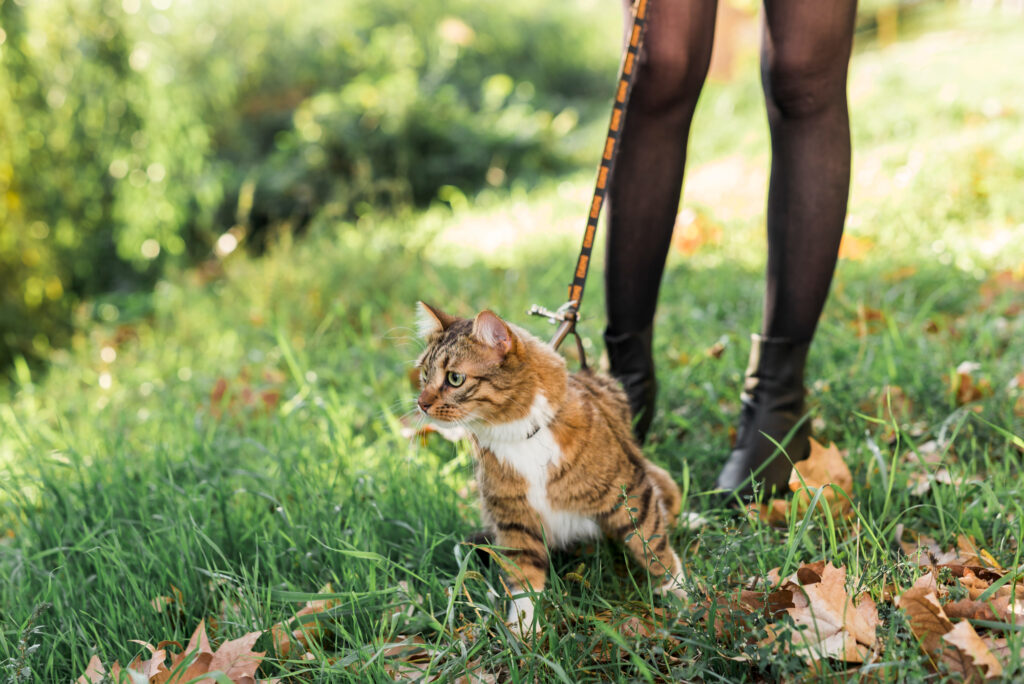
Before You Start: Is Leash Walking Right for Your Cat?
Not every cat wants to explore the outdoors, and that is perfectly fine. Confident, curious cats who already investigate every open window or door tend to take to leash walking most easily, while shy or older cats may find the experience overwhelming. Kittens and young adults usually adapt fastest, but patient training can work at almost any age. Pay attention to your individual cat’s temperament rather than pushing a reluctant pet outside.
It is also worth a quick check-in with your veterinarian before you begin. Outdoor time raises your cat’s exposure to parasites, other animals, and infectious disease, so make sure vaccinations and flea, tick, and heartworm prevention are current. The ASPCA’s cat care resources are a helpful reference for keeping a walking cat protected and healthy.
Step 1: Choose the Right Gear
Before you head outdoors, invest in a comfortable, escape-proof harness designed specifically for cats. Look for an H-style or vest-style harness that distributes pressure across the chest and shoulders. Avoid clipping a leash to a collar alone, because a startled cat that lunges or backs out can put sudden strain on the neck. A good harness should fit snugly enough that you can slip only a finger or two underneath, with no gaps a determined cat could wriggle out of.
Introduce the harness gradually and indoors. Let your cat sniff it, leave it near their bed or food bowl, and pair its presence with treats and praise. When they seem relaxed, drape it over their back, then progress to fastening it for a few minutes at a time. Some cats freeze or flop over the first time they wear a harness; that reaction usually fades once they associate the gear with rewards.
Step 2: Practice Leash Training Indoors
Once your cat is comfortable wearing the harness, attach a lightweight leash and let them roam freely inside while you follow along, keeping the leash loose. The goal at this stage is simply for your cat to get used to the slight weight and feel of the leash, not to be led. Avoid pulling or dragging, which can frighten a cat and set your progress back.
Over several short sessions, gently encourage your cat to walk toward you using a treat or a favorite toy, and reward any movement in your direction. Keep sessions brief and upbeat, ending while your cat is still enjoying themselves. This indoor practice builds the foundation for calm, cooperative walks before you ever open the front door.

Step 3: Take the First Steps Outside
Choose a quiet, familiar, and enclosed space for your cat’s first outdoor adventures, such as a fenced yard, patio, or balcony. Carry your cat outside rather than letting them bolt through an open door, which can encourage door-dashing later. Set them down and let them take in the sights, sounds, and smells at their own pace. Many cats will crouch low and observe for a while before they feel bold enough to explore.
Keep these first outings short, even just a few minutes, and stay close. Watch your cat’s body language carefully: relaxed ears, a loose tail, and curious sniffing are good signs, while flattened ears, a puffed tail, crouching, or trying to bolt mean it is time to calmly head back inside.
Step 4: Keep the Experience Positive and Safe
Make each walk something your cat looks forward to. Bring high-value treats, let them investigate grass and safe objects, and allow gentle exploration on their terms. Steer clear of crowded, noisy areas and be alert to hazards such as traffic, off-leash dogs, aggressive wildlife, and toxic plants. Lilies, sago palm, and azaleas are among the many common plants that are dangerous to cats, and you can check questionable species against the ASPCA’s cat care information before letting your cat nibble.
Never tie your cat’s leash to a fixed object and step away, and never leave them outside unsupervised. A leashed cat that panics can injure itself trying to escape. If you would like a broader overview of feline health and safety concerns tied to outdoor access, the Cornell Feline Health Center is an authoritative resource.
Step 5: Build Up Gradually
As your cat grows more confident, slowly extend the length and range of your walks. Always prioritize their well-being over distance or duration. Some cats are content with a few quiet minutes in the yard, while others come to enjoy longer neighborhood strolls. Respect your individual cat’s preferences and physical limits, and let their comfort, not a schedule, guide how far you go.
Between outings, inspect the harness and leash regularly for fraying, weakened stitching, or worn clips, and replace anything that looks compromised. A little consistency and patience turn leash walks into a safe, enriching routine that strengthens the bond between you and your cat.
Frequently Asked Questions
Can any cat be trained to walk on a leash?
Most cats can learn to tolerate or even enjoy a harness and leash, but temperament matters. Bold, curious cats usually adapt quickly, while timid or senior cats may never feel comfortable outdoors, and that is okay. Go at your cat’s pace and never force the issue.
Why shouldn’t I use a collar instead of a harness?
A collar concentrates force on the neck, and a startled cat that lunges or pulls back can injure its throat or slip free entirely. A well-fitted cat harness spreads pressure across the chest and shoulders and is far harder to escape, making it the safer choice for walks.
How long does it take to leash train a cat?
There is no fixed timeline. Some cats accept the harness in a few days, while others need several weeks of short, positive sessions before they are ready to venture outside. Rushing tends to backfire, so let your cat’s comfort dictate the schedule.
What should I do if my cat gets scared outside?
If your cat crouches, puffs up, flattens its ears, or tries to bolt, stay calm and carry it back to a familiar, secure space. End the session on a quiet note and try a shorter, calmer outing next time rather than pushing through the fear.
Is it safe to let my cat eat grass or plants on a walk?
A little grass is generally harmless, but many common outdoor and garden plants are toxic to cats. Keep your cat away from unfamiliar vegetation and check questionable species against a trusted source such as the ASPCA before allowing any nibbling.

Recent Comments