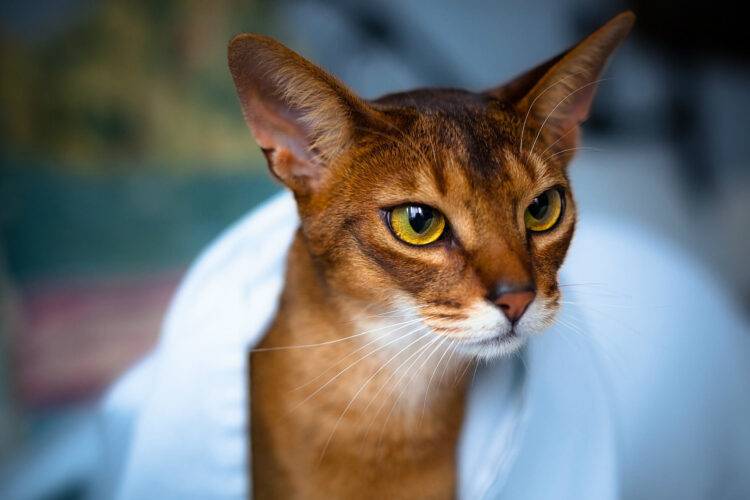
The Abyssinian is one of the world’s oldest and most striking domestic cat breeds: an athletic, endlessly curious shorthair with warm ticked fur and almond-shaped eyes that seem to glow. Affectionately nicknamed the “Aby” by enthusiasts, this cat bonds deeply with its people, generally gets along with other pets, and brings nonstop energy and intelligence into a home.
Abyssinian Cat at a Glance
| Origin | Southeast Asia / Indian Ocean coast (refined in Britain) |
|---|---|
| Size | Medium — males 7.5–11 lb (3.5–5.0 kg), females 6–9 lb (2.7–4.0 kg) |
| Coat | Short, ticked tabby |
| Colors | Ruddy, red (sorrel), blue, fawn |
| Body type | Foreign (lithe, well-muscled) |
| Lifespan | 12–15 years |
| Temperament | Active, curious, intelligent, playful |
| Activity level | High |
| Vocalization | Quiet, soft chirps |
| Grooming needs | Low |
| Good with kids & pets | Yes |
| Hypoallergenic | No |
| Recognized by | TICA, CFA, FIFe, WCF |
Appearance
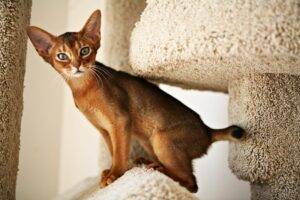
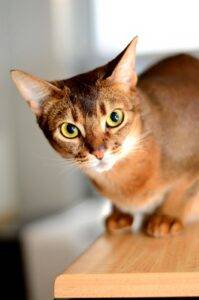
The Abyssinian is a medium-sized cat of foreign body type, meaning it is lithe, well-muscled, and elegant rather than bulky. Adult males typically weigh 7.5 to 11 pounds and females 6 to 9 pounds. The breed is famous for its ticked tabby coat, in which each individual hair is banded with two or three colors. The result is a warm, shimmering, almost glittering effect that comes alive when the cat moves.
The head is a modified wedge with gently rounded contours, set off by large, alert ears that are often tufted at the tips. The almond-shaped eyes come in gold, green, copper, or hazel and are rimmed with a dark “eyeliner” that gives the breed its trademark expressive gaze. The legs are long and slender, the paws small and oval, and the tail tapers to a fine point.
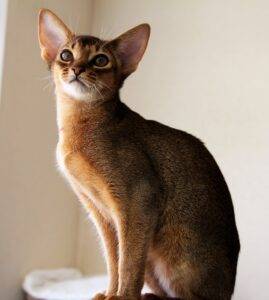
Major registries recognize four classic Abyssinian colors. Ruddy is the original and most common, with warm reddish-brown ticking over an apricot base. Red, also called sorrel, is copper-red with chocolate ticking. Blue shows warm blue-grey ticking on a beige base, and fawn is a soft pinkish-buff with darker fawn ticking. Some associations also accept silver variants. In every color, the underparts and inner legs stay a clear, unticked tone that contrasts with the ticked back and sides.
Personality and Temperament
Abyssinians are highly active, curious, and intelligent, which is why some fans call them “the Border Collies of the cat world.” They climb, leap, investigate every cupboard, and follow their humans from room to room. Despite all that energy, they are not nervous or destructive by nature. A well-socialized Aby is confident, balanced, and gentle.
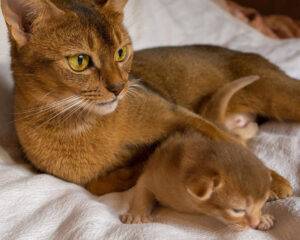
This is a people-oriented breed that does not enjoy being left alone all day. Abyssinians bond strongly with their primary person but are usually friendly with the whole family, and many get along with other cats and even dogs. They are also surprisingly quiet for such an active cat, communicating with a soft, musical chirp rather than the loud, insistent meow you might hear from a Siamese.
If you are away for long stretches, consider keeping a second cat for company and providing tall climbing furniture, food puzzles, and a rotating supply of toys. A bored Abyssinian will invent its own entertainment, which usually involves knocking things off shelves.
Health
The Abyssinian is generally a robust breed with a typical lifespan of 12 to 15 years, and many individuals live well into their late teens with attentive care. As with any pedigreed cat, there are a few hereditary conditions that responsible breeders screen for. The American Veterinary Medical Association notes that knowing a breed’s predispositions helps owners and veterinarians watch for early signs (AVMA).
- Progressive retinal atrophy (PRA-rdAc) — a late-onset form of inherited blindness; a DNA test is widely available.
- Pyruvate kinase deficiency (PK-Def) — causes intermittent anemia and can also be tested for with a DNA panel.
- Renal amyloidosis — a kidney disease historically associated with the breed.
- Patellar luxation — occasional and usually mild.
Before committing to a kitten, always ask the breeder for current PRA-rdAc and PK-Def test results on both parents. Schedule routine annual veterinary check-ups as well, and ask your veterinarian about periodic kidney panels as the cat ages. For more on preventive feline care, the Cornell Feline Health Center is a reliable starting point.
Care and Grooming
Coat care is minimal. A weekly brushing with a soft bristle brush or a grooming glove keeps the short ticked coat shiny and removes loose hair. Abyssinians shed lightly year-round and a little more heavily in spring.
Trim the claws every two to three weeks and brush the teeth at least a few times a week, or use a veterinary dental diet. Check the ears periodically for wax buildup and wipe them gently with a damp cotton pad if needed. Because the breed is athletic and lean by nature, feed a high-protein diet measured to body condition. Obesity is uncommon in Abyssinians but can develop in under-exercised indoor cats. General feeding and grooming guidance is available from the ASPCA.
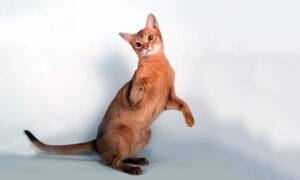
Vertical space is not optional for this breed. Tall cat trees, wall shelves, and window perches give an Aby the heights it craves, and a cat wheel or daily interactive play sessions help burn off its remarkable energy.
History
The breed’s exact origins are still debated. Genetic studies suggest the modern Abyssinian descends from cats of coastal Southeast Asia and the Indian Ocean region, but the breed name and the earliest formal show entries trace to Britain in the 1860s and 1870s, when a cat named Zula was reportedly brought back from Abyssinia (modern Ethiopia) by a returning soldier. Whatever the truth, the silhouette and ticked coat closely resemble cats depicted in ancient Egyptian art, which gave the early breed much of its romantic mystique.
The Abyssinian was officially recognized in England in 1882 and was nearly wiped out by feline disease outbreaks during World War II. The modern population descends from a small group of survivors and a careful postwar rebuild. Today the Abyssinian is consistently among the most popular pedigreed breeds worldwide and is recognized by registries including the TICA, the CFA, and the FIFe.
Frequently Asked Questions
Are Abyssinian cats good for first-time owners?
They can be, as long as the owner is prepared for a high-energy, attention-seeking cat. Abyssinians are not demanding to groom or feed, but they need daily play, climbing space, and company. People who want a calm, independent lap cat may find the breed too busy.
Are Abyssinian cats hypoallergenic?
No. No cat breed is truly hypoallergenic, and the Abyssinian is no exception. Its short coat sheds less visibly than a long-haired breed, but it still produces the Fel d 1 protein that triggers most cat allergies.
Do Abyssinians get along with other pets?
Generally yes. Most Abyssinians are sociable and adapt well to other cats and cat-friendly dogs, especially when introduced gradually. Because they dislike being alone, a compatible companion animal can be a real benefit in a household where people are away during the day.
How much exercise does an Abyssinian need?
A lot by feline standards. Plan on at least one or two dedicated interactive play sessions a day, plus constant access to vertical perches and climbing furniture. Without enough outlets, an Aby’s energy tends to turn into mischief.
How long do Abyssinian cats live?
Most Abyssinians live 12 to 15 years, and well-cared-for individuals often reach their late teens. Buying from a breeder who screens for hereditary conditions and keeping up with annual veterinary visits both help support a long, healthy life.


Recent Comments