If your cat treats 3 a.m. as prime social hour, you are not alone. Cats are wired to be most active around dawn and dusk, so late-night pacing, meowing, and pouncing on your feet are common complaints among owners. The good news is that most nighttime restlessness has an identifiable cause, and once you understand it you can usually reset your cat’s schedule and reclaim your sleep.
Key Takeaways
- Nighttime activity is natural for cats, but a sudden change in behavior deserves a vet check to rule out illness.
- Boredom and pent-up energy are the most common non-medical causes of night waking.
- A busy, enriched day plus a satisfying meal before bed does more than any single quick fix.
- Answering attention-seeking meows teaches your cat that the strategy works, so consistency is essential.
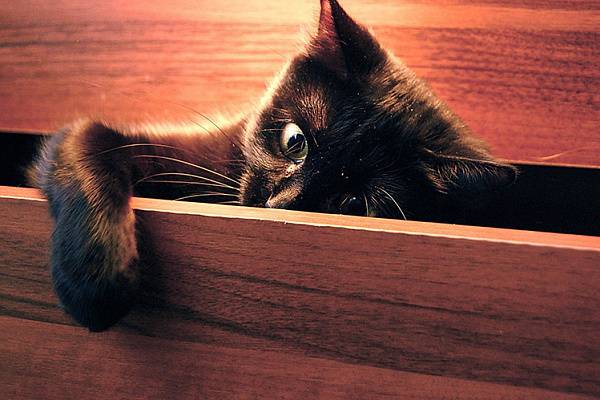
Cats love to sleep, but mostly during the day. The wild ancestors of the house cat were largely crepuscular and nocturnal hunters, and echoes of that preference still live in our pets. On top of that, many cats are home alone all day in a calm, quiet house that is perfect for napping. When you finally get home in the evening, wind down, and go to bed, your cat has had few chances to burn off energy or get your attention, so it goes looking for both at night.
Rule Out a Health Problem First
Before you try to change the behavior, ask yourself why it is happening. This matters most when the night waking is new or getting worse, because restlessness after dark can signal a genuine medical issue rather than simple boredom. Pain, an overactive thyroid, high blood pressure, and the confusion that comes with feline cognitive decline in older cats can all disrupt sleep and drive excessive vocalizing at night. If your cat has suddenly started waking you when it never used to, or the meowing sounds distressed, it is worth a call to your veterinarian to rule out an underlying condition before treating the behavior as a habit. You can read more about common feline health concerns through the Cornell Feline Health Center and general cat-care guidance from the ASPCA.
If your cat has a clean bill of health, the cause almost always comes down to a lack of daytime attention and stimulation, or simply an individual personality that runs on the lively side.
Do Not Reward the Wake-Up Calls
Here is the tricky part. A clever cat will often ramp up the noise at night specifically to get a reaction from you. It does not matter to the cat whether you scratch behind its ears or get up and shut it out of the room. What matters is that it got your attention, so the mission was accomplished. If you respond to every nighttime meow (assuming your cat is not sick), you are teaching it that the strategy works and all but guaranteeing an encore the next night. Staying consistent and not reacting is one of the hardest but most effective things you can do.
Wear Your Cat Out During the Day
The single best way to stop a cat from prowling all night is to keep it busy and tired during the day, and to make its waking hours as rich and varied as possible. If someone is home during the day, ask them to play with the cat often and gently keep it from sleeping the afternoon away. If the house is empty while you are at work, leave out a rotation of toys your cat can enjoy on its own. Modern pet shops carry a huge range of solo-play options, from puzzle feeders to motion toys, so you are sure to find something that suits your cat.
A tired cat is a well-behaved cat, and structured play is the healthiest way to get there. For ideas, see our guides on the best toys for cats and why an interactive toy is such a good investment.
If you would not mind a bigger household, it may also be worth considering a second cat. With the right introduction, most cats can share a home happily and will burn energy playing and chasing each other, often without disturbing you at all. This will not suit every household, but for the right owner it solves the boredom problem at its root.

Use the Evening Meal to Your Advantage
Another reliable trick is a hearty meal right before bedtime. Cats naturally tend to eat, groom, and then sleep, so a full belly late in the evening nudges your cat toward settling down for the night just as you do. Timing the largest meal of the day for the evening works with your cat’s instincts instead of against them.
If the Night Waking Continues, Protect Your Sleep
If, despite all your efforts, your cat still treats the night as playtime, it may be time to stop trying to change the cat and start protecting your own rest instead.
The simplest option is to close the bedroom door. Some cats accept this rule quietly and leave their owners in peace. Others will scratch at the door frame and cry to be let in. For those cats, quiet “night” toys that glow in the dark and make little noise can keep them occupied without waking the whole house. You can also set up a dedicated play area and a cozy cat house or bed outside the bedroom, giving your cat an appealing place to rest that is not your pillow.
One more thing worth ruling out is hunger. If your cat is waking you specifically to be fed, simply leave a portion of night food (and a bowl of clean, fresh water) available so it can help itself without recruiting you. An automatic feeder set to dispense a small early-morning meal can break the cycle without you ever leaving the bed.
Take the time to learn your cat’s routines and habits, find the approach that fits its personality, and you can enjoy a full night’s sleep without shortchanging your pet. For related help with a very vocal cat, see our guide on what to do about a cat yowling at night.
Frequently Asked Questions
Why does my cat suddenly wake me up every night?
A sudden change in nighttime behavior is worth investigating. In many cases it comes down to boredom or a lack of daytime activity, but it can also signal a health issue such as pain, an overactive thyroid, or age-related cognitive decline in senior cats. If the behavior appeared out of nowhere or the meowing sounds distressed, check in with your veterinarian before assuming it is just a habit.
Should I feed my cat if it wakes me up at night?
If genuine hunger is the trigger, leaving out a small portion of food and fresh water, or using a timed automatic feeder, can solve it without training your cat to wake you. What you want to avoid is getting up and feeding on demand every time your cat meows, since that quickly teaches it that waking you leads to a snack.
Is it bad to lock my cat out of the bedroom at night?
No. A closed door is a reasonable way to protect your sleep, and many cats adjust to it without complaint. Just make sure the cat has everything it needs on the other side of the door, including water, a litter box, a comfortable bed, and a few quiet toys, so it has appealing alternatives to scratching and crying.
Will getting a second cat stop the nighttime activity?
It can, because two compatible cats often tire each other out with play instead of turning to you for stimulation. A second cat is a real commitment, though, and a poor introduction can create new problems, so weigh it carefully rather than adopting purely to solve nighttime waking.

Recent Comments