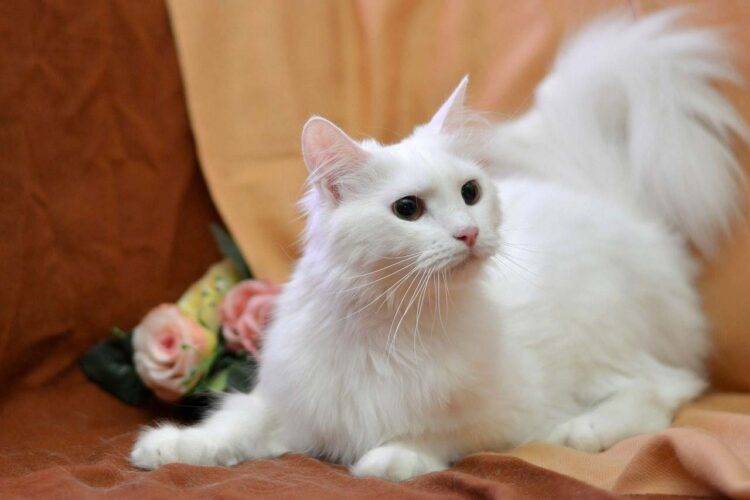
The Turkish Angora is one of the oldest natural cat breeds — an elegant, semi-longhaired native of central Turkey known for a silky white coat, almond-shaped eyes, and a famously lively, affectionate personality. Once kept in the courts of European royalty, today’s Angoras are clever, athletic companions that bond closely with their families and bring an unmistakable sense of grace into the home.
Key Takeaways
- A medium-sized, finely boned breed with a semi-long, silky coat that has very little undercoat, so matting is rare and grooming stays simple.
- Highly intelligent, social, and athletic — Angoras need vertical space, puzzle toys, and daily interaction to stay happy.
- White, blue-eyed Angoras carry a higher risk of congenital deafness; reputable breeders BAER-test white kittens before placement.
- A robust natural breed that commonly lives 15 to 18 years with good preventive veterinary care.
Quick Facts
| Origin | Turkey |
|---|---|
| Size | Medium (males 3.0–5.0 kg, females 2.5–4.0 kg) |
| Coat | Semi-long — white (classic); many colors and patterns |
| Body type | Foreign |
| Lifespan | 12–18 years |
| Temperament | Affectionate, playful, intelligent, active |
| Activity level | High |
| Vocalization | Moderate |
| Grooming needs | Moderate |
| Good with children | Yes |
| Good with other pets | Yes |
| Hypoallergenic | No |
| Recognized by | TICA, CFA, FIFe, WCF |
Appearance
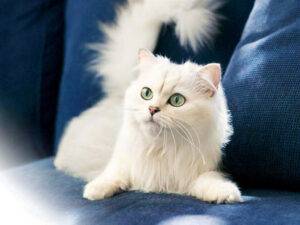
The Turkish Angora is a medium-sized cat with a long, lithe, finely boned body and a graceful, foreign silhouette. Despite that elegant build, an Angora in good condition is firmly muscled and surprisingly powerful for its size. Males rarely top 5 kilograms, and females are typically smaller still.
The head is a smooth, modified wedge with a gently rounded skull and a fine muzzle. The ears are large, wide at the base, and set high on the head, finishing in delicate points that echo the wedge below. The eyes are large, almond-shaped, and slightly slanted, ranging in color from green and amber to copper and blue — including the striking odd-eyed pairing seen in some white cats. The legs are long and slender, with the hind legs noticeably taller than the front, and the tail is long, plumed, and tapered.
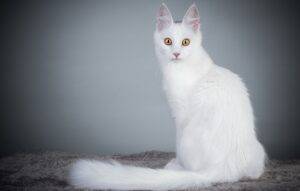
The coat is semi-long, fine, and silky, with very little undercoat. It lies smoothly along the body but lengthens noticeably into a full ruff at the chest, britches on the hind legs, and a flowing plume on the tail. Pure white is the classic and historically prized color, but modern breed standards accept a wide palette: black, blue, red, cream, tortoiseshell, and a range of tabby and bicolor patterns. Pointed and Burmese-style colors are not permitted in most registries.
Personality
Turkish Angoras are affectionate, intelligent, and intensely social. They form strong bonds with their families and like to be in the middle of whatever is happening, whether that means supervising the cooking, joining a video call, or perching on the highest shelf to keep an eye on visitors. Most Angoras choose a favorite person but stay warm with everyone in the household.
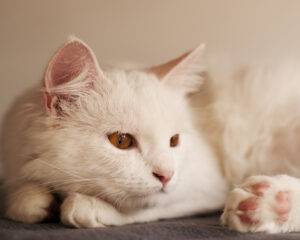
This is an active, athletic breed with a real problem-solving streak. Angoras learn their names quickly, take well to clicker training, and many figure out how to open cupboards, flip light switches, or fetch a favorite toy without being taught. Climbing, leaping, and racing through the house are favorite pastimes, so tall cat trees and rotating puzzle toys are well worth providing.
Despite all that energy, Angoras are not aloof. They will happily curl up in a lap or sleep beside you once the day’s exploring is done. They get along well with respectful children, friendly dogs, and other cats, and they tolerate a busy household far better than most semi-longhaired breeds. They tend to be moderately vocal, favoring a soft, conversational chirp over a Siamese-style yowl.
Health
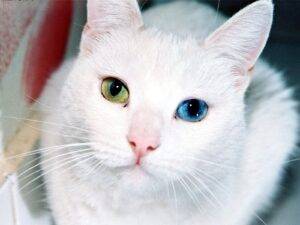
Turkish Angoras are a robust natural breed, and life expectancies of 15 to 18 years are common with good preventive care. Two issues are worth knowing about. White, blue-eyed Angoras carry a higher risk of congenital deafness linked to the same gene that produces the white coat; cats with one or both blue eyes should be evaluated by a veterinarian using a BAER (brainstem auditory evoked response) hearing test, the standard objective screen for feline deafness (Cornell Feline Health Center). The breed has also occasionally been reported to carry hereditary ataxia, a neurological condition affecting young kittens; responsible breeders screen against it.
Annual wellness exams, core vaccinations, parasite prevention, and a high-quality diet matched to life stage are the foundation of long-term health (ASPCA). Before bringing a kitten home, always ask the breeder for hearing tests on white kittens and for documentation of the parents’ health screening.
Care
Daily life with a Turkish Angora is refreshingly straightforward. Despite the semi-long coat, the sparse undercoat means matting is rare; a thorough comb-through once or twice a week is usually enough, with a little extra attention during seasonal shedding in spring and autumn. Most Angoras enjoy the attention and will purr right through a grooming session.
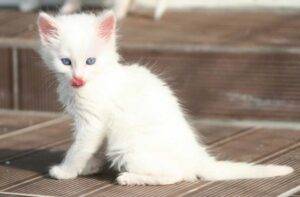
Beyond grooming, an Angora needs space to run, climb, and play. Cat trees, window perches, and interactive toys help burn off the breed’s considerable energy; without an outlet, a bored Angora will create one for itself — often loudly and at three in the morning. Brush the teeth weekly, trim the nails every two to three weeks, and check the ears during grooming sessions. Unusually for cats, many Turkish Angoras are fascinated by water and will happily splash in a sink or shallow tub — a useful detail to know before leaving a full bathtub unattended.
History
The Turkish Angora is one of the oldest documented domestic cat breeds, taking its name from the city of Ankara (historically Angora) in central Turkey. Long-coated white cats from the region were already prized in the Ottoman Empire and were carried to Europe in the 17th century by travelers, including the Italian Pietro Della Valle. Through the 18th and 19th centuries, Angoras were kept by French and English aristocracy and admired as among the most fashionable pets of the day.
By the late 19th century the breed was in steep decline, eclipsed by the heavier-coated Persian, for which Angoras were often used as outcrosses. Recognizing the loss, the Ankara Zoo established a careful breeding program to preserve the original Turkish type — particularly white cats with odd eyes — and treated them as a national treasure. American breeders imported pairs from the zoo in the 1960s and rebuilt the breed in the West. The Cat Fanciers’ Association recognized the Turkish Angora in 1973 and admitted non-white colors a decade later. Today the breed is recognized by all major registries and remains a living link to one of the oldest domestic cat lineages in the world.
Registry Recognition and Health Watchlist
The Turkish Angora is recognized by The International Cat Association (TICA), the Cat Fanciers’ Association (CFA), the Fédération Internationale Féline (FIFe), and the World Cat Federation (WCF), first recognized in 1962.
Conditions reported in the breed include congenital deafness in white, blue-eyed cats, and hereditary ataxia. Reputable breeders screen their breeding cats and guarantee against early-onset hereditary disease, so always ask to see the parents’ test results before adopting a kitten.
Frequently Asked Questions
Are all Turkish Angoras deaf?
No. Deafness is associated specifically with the dominant white gene and blue eyes, so it most often affects white, blue-eyed cats — and even then not every cat is affected. Angoras of other colors, and white cats with non-blue eyes, are at much lower risk. A veterinary BAER hearing test is the only reliable way to confirm whether a cat hears normally in both ears.
Are Turkish Angoras high-maintenance to groom?
Not especially. Because the coat has little undercoat, it resists matting and usually needs only a weekly or twice-weekly combing, with extra brushing during the spring and autumn shed. That makes the Angora considerably easier to groom than denser semi-longhaired breeds.
Do Turkish Angoras get along with children and other pets?
Generally, yes. Angoras are sociable and adaptable, and they tend to do well with respectful children, friendly dogs, and other cats. As with any introduction, supervise early interactions and give the cat space to retreat when it wants quiet.
How much exercise does a Turkish Angora need?
A lot, by cat standards. This is an athletic, intelligent breed that thrives on climbing, chasing, and problem-solving. Provide tall cat trees, window perches, and rotating interactive toys, plus a few short daily play sessions, to keep an Angora physically and mentally satisfied.
Is the Turkish Angora hypoallergenic?
No. No cat breed is truly hypoallergenic, and the Turkish Angora is no exception. People with cat allergies react primarily to a protein in saliva and skin oils rather than to coat length, so spend time with the breed before committing if allergies are a concern.

Recent Comments